
What Size Drill for Wood Screws: Precision & Performance
Table of Contents
- Introduction
- The Foundation of Fastening: Understanding Wood Screws
- The Indispensable Role of Pilot Holes
- Determining the Right Drill Bit Size: A Scientific Approach
- Precision in Practice: Beyond the Drill Bit
- The Maden.co Advantage: Sourcing American-Made Precision Fasteners
- Conclusion
- FAQ
Introduction
Imagine a procurement manager on a tight deadline, overseeing a critical assembly project where thousands of wood screws are needed. The specifications are clear, the timeline is aggressive, but a seemingly minor oversight—the incorrect drill bit size for pilot holes—begins to cause significant delays. Stripped screws, cracked timber components, and compromised structural integrity become a costly reality, pushing deadlines and inflating budgets. This isn't just a hypothetical scenario; it's a common and avoidable challenge in industrial and commercial applications, underscoring the profound impact of what might appear to be a simple detail: selecting the right drill size for wood screws.
In precision manufacturing, construction, and MRO (Maintenance, Repair, and Operations) contexts, the correct application of fasteners is paramount. It affects not only the immediate assembly process but also the long-term durability, safety, and performance of the finished product or repaired machinery. This comprehensive guide will delve into the critical factors that determine the optimal drill bit size for wood screws, exploring the nuances of screw anatomy, wood characteristics, and drilling techniques. We aim to equip procurement managers, MRO buyers, design engineers, and business owners with the authoritative knowledge to make informed decisions, ensuring the integrity and efficiency of their projects. Our main message is clear: precision in pilot hole drilling is not merely a best practice; it is a foundational element of industrial excellence and a cornerstone of effective procurement, directly impacting your total cost of ownership and project success.
The Foundation of Fastening: Understanding Wood Screws
Before we can accurately determine the ideal drill bit size, it’s essential to thoroughly understand the very components we are fastening: wood screws. These seemingly simple devices are engineered with specific characteristics that dictate their performance and the preparatory work required for their successful installation.
Anatomy of a Wood Screw
A wood screw is designed to create a strong, lasting bond with timber materials. Its effectiveness hinges on several key features:
-
Head: The top part of the screw, designed to be driven by a tool and provide a bearing surface against the material. Common types include:
- Flat Head: Tapers to a point, designed to sit flush or below the surface when countersunk. Ideal for a smooth finish.
- Round Head: Features a domed top that sits proud of the surface. Often used for decorative purposes or when a flush finish isn't required.
- Oval Head: A hybrid of flat and round, with a decorative dome that sits slightly above the surface and a conical underside for countersinking.
- Pan Head, Hex Head: Common in heavier-duty applications, offering greater driving torque and larger bearing surfaces.
- Drive Type: The recess in the head that accommodates a screwdriver or power tool bit. Common types include slotted, Phillips, square (Robertson), Torx (star drive), and Pozi-drive. The chosen drive type impacts cam-out resistance and ease of driving.
- Shank: The unthreaded portion of the screw directly beneath the head. In many wood screws, this allows the screw to pass freely through the top piece of material in a joint, pulling the two pieces tightly together when the threads engage the bottom piece. The shank diameter is a critical measurement for determining the clearance hole.
- Threads: The helical ridges that cut into the wood, providing holding power. The major diameter is the overall diameter of the threads (the widest part), while the minor diameter (or root diameter) is the diameter of the screw's core, measured at the base of the threads. This minor diameter is crucial for determining the pilot hole size in the receiving material.
- Tip: The very end of the screw, which can be sharp, blunt, or self-tapping, aiding in initial penetration.
Material Matters: Brass, Steel, and Silicon Bronze
The material composition of a wood screw plays a significant role in its strength, corrosion resistance, and how it interacts with the wood during installation. Sourcing from verified U.S. manufacturers, as we facilitate at Maden.co, ensures consistent material quality and adherence to specifications.
- Brass Wood Screws: Prized for their aesthetic appeal and corrosion resistance, brass screws are commonly used in fine woodworking, decorative applications, and environments where rust would be detrimental. However, brass is a softer metal than steel, making brass screws more susceptible to shearing or stripping if over-torqued or if an improperly sized pilot hole creates excessive resistance. For instance, a beautifully crafted piece requiring a secure yet elegant fastener might utilize a Round Slot Drive Brass Wood Screw for its classic look. Similarly, for a flush finish in cabinetry, a Flat Slot Drive Brass Wood Screw might be the ideal choice, demanding precise pilot drilling to prevent damage to both the screw and the delicate wood.
- Steel Wood Screws: The most common type, steel screws offer superior strength and are available in various finishes like zinc-plated, galvanized, or stainless steel to enhance corrosion resistance. These are the workhorses for general construction and heavy-duty applications.
- Silicon Bronze Wood Screws: Offering excellent corrosion resistance, particularly in marine or outdoor environments, silicon bronze screws are stronger than brass and ideal for demanding applications where durability and resistance to harsh elements are paramount. For projects demanding extreme longevity and resilience, such as boat building or outdoor architectural elements, an Oval Slot Drive Silicon Bronze Wood Screw would be an exceptional choice, balancing strength with enduring protection against the elements.
Understanding these material properties is crucial for procurement managers. It impacts not only the selection of the screw itself but also the appropriate drilling strategy to ensure optimal performance and longevity. At Maden.co, our mission to democratize access to American manufacturing means we connect industrial buyers with over 2.5 million American-made products, including a vast array of fasteners, from our network of 800+ verified U.S. manufacturers. This ensures access to the right materials for every demanding application.
The Indispensable Role of Pilot Holes
For any professional working with wood screws, the pilot hole is not an optional nicety; it is a critical step that ensures the structural integrity of the joint, preserves the material, and streamlines the installation process. Skipping this step, or getting it wrong, can lead to a cascade of problems from compromised aesthetics to catastrophic joint failure.
Why Pilot Holes Are Non-Negotiable
- Prevents Wood Splitting: This is perhaps the most significant reason. When a screw is driven into wood without a pilot hole, its threads act like a wedge, forcing wood fibers apart. In dense hardwoods, near edges, or in thinner stock, this outward pressure invariably leads to splitting, compromising the strength and appearance of the joint.
- Ensures Proper Thread Engagement: A correctly sized pilot hole allows the screw threads to cut into the wood cleanly, creating a strong, secure connection. Too small, and the threads might strip the wood or break the screw. Too large, and the threads won't have enough material to grip, leading to a weak joint and reduced holding power.
- Reduces Driving Torque and Prevents Stripping/Breaking: Driving a screw into an undersized or non-existent pilot hole requires excessive torque. This can strip the screw head (especially with softer metals like brass), break the screw shank, or even damage the driving tool. A proper pilot hole reduces friction, allowing the screw to be driven smoothly and efficiently.
- Maintains Material Integrity and Aesthetics: Beyond preventing splits, pilot holes help maintain a clean entry point, especially with high-quality finished lumber. This is vital for projects where visual appeal is as important as structural strength.
- Facilitates Assembly: For design engineers planning complex assemblies or MRO buyers replacing components, consistent pilot holes ensure that parts align correctly and screws can be driven without fighting resistance, speeding up the assembly process. This efficiency contributes directly to a reduced total cost of ownership (TCO) for a project.
The importance of this step cannot be overstated. A design engineer might specify a precise DIN standard for a component, but without the correct pilot hole for its fasteners, the integrity of the entire design is at risk. Procurement managers must understand that investing in the right tools and training for proper pilot hole drilling is an investment in product quality and project reliability.
Determining the Right Drill Bit Size: A Scientific Approach
Selecting the correct drill bit size for wood screws isn't a guessing game; it's a calculated decision based on several critical factors. The goal is to create a hole that allows the screw's body to pass through easily while providing enough wood for the threads to bite firmly without splitting the material. This often involves drilling two different types of holes: a clearance hole and a pilot hole.
The Two Critical Holes: Clearance and Pilot
Understanding these two distinct types of holes is fundamental to strong, professional wood joinery:
-
Clearance Hole (Shank Hole / Body Hole):
- Purpose: This hole is drilled in the top piece of wood (the piece being attached) and should match the shank diameter of the screw. Its function is to allow the unthreaded portion of the screw to pass freely through this top piece.
- Why it's Crucial: By allowing the screw's shank to slide through unimpeded, the threads can fully engage the bottom piece of wood, pulling the two components tightly together. If the clearance hole is too small, the screw threads will bind in the top piece, preventing a tight joint and potentially leaving a gap.
- Sizing: The clearance hole should be equal to or slightly larger than the screw's unthreaded shank diameter.
- Example: For a screw with a #8 gauge and a shank diameter of 0.164 inches, a 5/32" (0.156") or 11/64" (0.171") drill bit would be appropriate, depending on the desired fit.
-
Pilot Hole (Thread Hole):
- Purpose: This hole is drilled in the receiving piece of wood (the piece the screw will thread into). Its purpose is to guide the screw and prevent splitting, while still providing ample material for the screw's threads to grip securely.
- Why it's Crucial: This hole matches the minor diameter (or root diameter) of the screw's threads. It provides a path for the core of the screw, leaving the wood fibers intact for the threads to cut into without undue stress.
- Sizing: This is the most variable measurement, influenced by the screw's minor diameter and the density of the wood.
- General Principle: The pilot hole should be slightly smaller than the major diameter of the screw threads but equal to or slightly larger than the minor (root) diameter.
Key Factors Influencing Pilot Hole Size
-
Screw Diameter (Gauge):
- Wood screws are often designated by a gauge number (e.g., #6, #8, #10), which indicates their diameter. As the gauge number increases, so does the screw's diameter.
- Each gauge has a corresponding major diameter (outer thread diameter) and minor diameter (inner shank/root diameter). These measurements are the starting point for selecting drill bits.
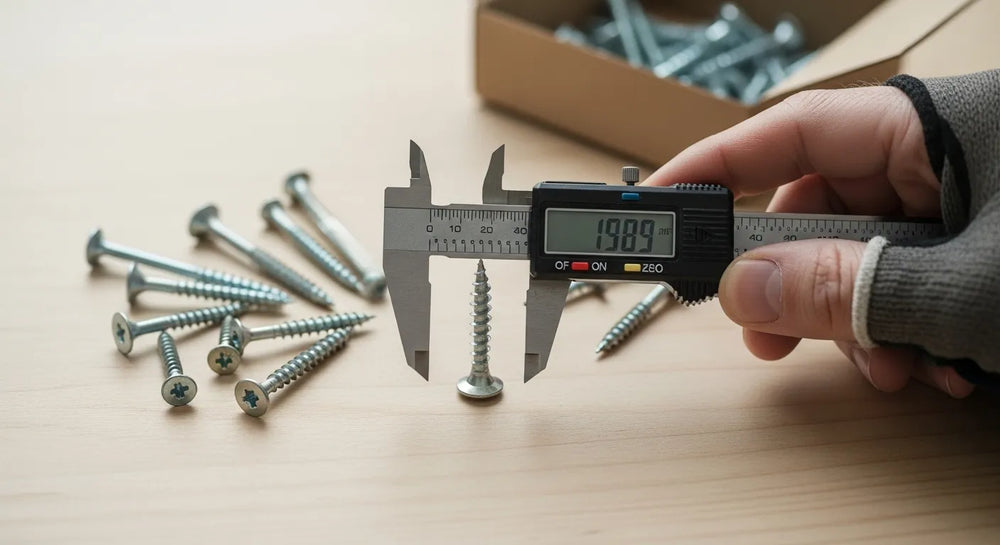
- Always measure the screw's shank and minor diameter directly with calipers for critical applications, as manufacturer specifications can vary slightly.
-
Wood Type and Density: This is perhaps the most significant variable.
- Softwoods (e.g., Pine, Spruce, Fir, Cedar): These woods are less dense and more prone to stripping if the pilot hole is too large. They are also more forgiving if the pilot hole is slightly undersized, but still susceptible to splitting, especially near edges. For softwoods, the pilot hole can be on the smaller side of the recommended range, often matching the screw's minor diameter or slightly smaller to ensure maximum thread engagement.
- Hardwoods (e.g., Oak, Maple, Cherry, Walnut): These woods are dense, brittle, and highly prone to splitting if a pilot hole is too small or absent. They also offer significantly more resistance to driving. For hardwoods, the pilot hole should be closer to, or even slightly larger than, the screw's minor diameter to reduce resistance and prevent splitting.
- Engineered Wood Products (Plywood, MDF, Particleboard): These materials have unique properties. Plywood behaves somewhat like solid wood but with layers. MDF and particleboard are dense but can be prone to crumbling or having screws pull out if the pilot hole is too large or if over-tightened. Testing on scrap material is always recommended.
-
Screw Material:
- Brass and Bronze: As softer metals, these screws are more susceptible to shearing or breaking if too much resistance is encountered. Using a pilot hole on the larger side of the recommended range, especially in hardwoods, is often prudent to protect the screw.
- Steel: Stronger steel screws can withstand more driving torque, allowing for a slightly tighter pilot hole if maximum holding power is desired and splitting isn't a concern.
-
Length of Screw and Depth of Engagement:
- Longer screws generally require more accurate pilot holes as they experience greater cumulative friction.
- If the screw is going into end grain (where wood fibers are cut across), a slightly larger pilot hole is often necessary to prevent splitting, as end grain is weaker and more prone to splitting.
Practical Guidelines for Drill Bit Sizing
While precise measurements are ideal, a practical approach often involves a combination of general rules and specific charts. Always test your chosen drill bit size on a scrap piece of the same material before committing to your final project. This is the single most reliable method to ensure optimal results.
Here's a generalized guideline, keeping in mind that actual screw dimensions can vary by manufacturer. Measurements are approximate; direct measurement is always best.
For Common Wood Screw Gauges (Approximate Values):
| Screw Gauge | Major Diameter (approx.) | Minor Diameter (approx.) | Clearance Hole (Softwood/Hardwood) | Pilot Hole (Softwood) | Pilot Hole (Hardwood) |
|---|---|---|---|---|---|
| #4 | 0.112 in (2.8 mm) | 0.076 in (1.9 mm) | 7/64" (2.7 mm) | 1/16" (1.6 mm) | 5/64" (2.0 mm) |
| #6 | 0.138 in (3.5 mm) | 0.096 in (2.4 mm) | 9/64" (3.6 mm) | 5/64" (2.0 mm) | 3/32" (2.4 mm) |
| #8 | 0.164 in (4.2 mm) | 0.116 in (2.9 mm) | 11/64" (4.4 mm) | 3/32" (2.4 mm) | 7/64" (2.8 mm) |
| #10 | 0.190 in (4.8 mm) | 0.138 in (3.5 mm) | 13/64" (5.2 mm) | 7/64" (2.8 mm) | 1/8" (3.2 mm) |
| #12 | 0.216 in (5.5 mm) | 0.158 in (4.0 mm) | 7/32" (5.6 mm) | 1/8" (3.2 mm) | 9/64" (3.6 mm) |
| #14 | 0.242 in (6.1 mm) | 0.180 in (4.6 mm) | 1/4" (6.4 mm) | 9/64" (3.6 mm) | 5/32" (4.0 mm) |
Method for Precise Selection (Recommended for Industrial Applications):
- Identify Screw Type: Determine if the screw has an unthreaded shank. If it does, you'll likely need both a clearance and a pilot hole. If it's fully threaded (common for certain types of construction screws), a clearance hole might not be necessary, but a pilot hole for the threads is almost always advisable.
- Measure Shank Diameter: Use a caliper to measure the unthreaded shank of the screw. Select a drill bit that is equal to or just slightly larger than this measurement for your clearance hole in the top piece of material.
- Measure Minor (Root) Diameter: Use a caliper to measure the core diameter of the screw at the base of the threads. This is your primary guide for the pilot hole.
-
Consider Wood Density:
- For Softwoods: Choose a drill bit that is equal to or slightly smaller than the minor diameter of the screw.
- For Hardwoods: Choose a drill bit that is equal to or slightly larger than the minor diameter of the screw, or even up to 90% of the screw's major diameter for very dense woods.
-
Test on Scrap: Drive the screw into a scrap piece of the same wood using your chosen drill bits.
- Too tight? (Screw difficult to drive, head strips, wood bulges): Increase pilot hole size.
- Too loose? (Screw spins, doesn't grip): Decrease pilot hole size.
- Wood splits? Increase pilot hole size, or ensure you are not drilling too close to an edge.
Drill Bit Types
- Twist Bits: The most common and versatile drill bits, suitable for general-purpose drilling in wood.
- Brad-Point Bits: Feature a sharp, pointed tip that prevents wandering and creates a very clean, precise entry hole, minimizing tear-out. These are often preferred for fine woodworking and visible applications.
- Countersink Bits: While not for pilot holes, these are essential for creating a conical recess for flat-head or oval-head screws, allowing them to sit flush with or below the surface. Combination drill-and-countersink bits are also available, saving time.
Precision in Practice: Beyond the Drill Bit
Achieving optimal fastening goes beyond merely selecting the correct drill bit size; it encompasses several best practices that enhance efficiency, safety, and the longevity of your projects. For industrial buyers and design engineers, these details contribute significantly to the overall quality and reliability of U.S.-made products.
Drilling Techniques for Optimal Results
- Marking and Layout: Precise marking is crucial. Use an awl or punch to create a small indentation at the exact center point where the screw needs to be driven. This helps prevent the drill bit from wandering upon initial contact.
- Using a Depth Stop: For consistent pilot hole depths, a depth stop (either a dedicated collar or a piece of tape wrapped around the drill bit) is invaluable. The pilot hole should extend slightly beyond the length of the screw's threaded portion to ensure full engagement and prevent the screw tip from bottoming out before the head seats.
- Drilling Straight: Maintaining a perfectly perpendicular drilling angle is vital. Tilting the drill can lead to off-center holes, weakened joints, or screws breaking during installation. A drill press offers the highest level of precision for repetitive tasks.
- Clearing Debris: Periodically withdrawing the drill bit during deep holes helps clear sawdust and wood chips, preventing the bit from binding and overheating, which can dull the bit and burn the wood.
- Lubrication: For softer screws like brass, or when working with very dense hardwoods, applying a small amount of wax or soap to the screw threads before driving can significantly reduce friction and the risk of shearing or stripping.
Specialized Fasteners and Applications
- Self-Tapping Wood Screws: While designed to create their own threads, a small pilot hole is often still beneficial, especially in hardwoods or when driving near edges, to prevent splitting and ensure a cleaner entry. The pilot hole for these should generally be the same size as the screw's minor (root) diameter.
- Hardened Wood Screws: These screws are typically made from heat-treated steel, making them stronger and less prone to breaking. They can often handle slightly tighter pilot holes than softer screws, but the risk of splitting the wood remains.
- Pocket Hole Joinery: This popular woodworking technique relies on angled, hidden screws. Specialized drill bits and jigs are used to create the pocket holes, and the general principles of pilot hole sizing still apply within the pocket.
- Compliance with Industry Standards: In many industrial applications, fasteners must comply with specific standards like DIN, ISO, or ANSI. For a procurement manager, ensuring that fasteners meet these standards is critical, and sourcing through platforms like Maden.co, which champions verified U.S. manufacturers, provides that assurance. We meticulously vet our network to guarantee that the products you source meet the rigorous demands of industrial excellence.
The Maden.co Advantage: Sourcing American-Made Precision Fasteners
In an era of complex global supply chains and fluctuating product quality, the ability to reliably source high-quality, American-made fasteners is a strategic imperative for procurement managers, MRO buyers, and design engineers. At Maden.co, we are not just a marketplace; we are a strategic partner in America's manufacturing revival.
Our vision is to become the definitive platform that proves American-made components are as accessible and convenient as any global alternative. We pride ourselves on our core values: American Manufacturing Pride, Digital Innovation, Supply Chain Transparency, Industrial Excellence, and Customer Empowerment. This commitment translates directly into tangible benefits for our customers.
Building Resilience and Efficiency into Your Supply Chain
- Unparalleled Access to American Manufacturing: With over 2.5 million U.S.-made products from 800+ verified U.S. manufacturers, Maden.co offers an expansive catalog that simplifies the search for even the most specialized fasteners. Whether you need specific materials like silicon bronze for marine applications or high-grade steel for structural components, our platform connects you directly with the American manufacturers who produce them. This dramatically reduces procurement friction and enhances supply chain resilience by minimizing reliance on volatile international shipping and geopolitical uncertainties.
- Quality and Compliance You Can Trust: Sourcing U.S.-made products means a higher likelihood of adherence to rigorous quality control standards and industry specifications. When your project demands compliance with critical industry standards, leveraging our platform ensures that the fasteners you procure meet those exact requirements. This ultimately improves your Total Cost of Ownership (TCO) by reducing defects, rework, and costly project delays caused by substandard parts.
- Digital Innovation for Seamless Procurement: Our platform is designed for industrial excellence and customer empowerment. It provides intuitive search capabilities, detailed product specifications, and direct access to a vast network of suppliers. This digital-first approach means that finding a specific Round Slot Drive Brass Wood Screw or an Oval Slot Drive Silicon Bronze Wood Screw is just a few clicks away, dramatically speeding up your sourcing process.
- Instant Financing for Strategic Purchases: We understand that large-volume purchases can impact cash flow. That's why we offer Instant Financing options directly at checkout. This strategic tool allows procurement managers and business owners to manage capital effectively and confidently make larger orders for critical components, ensuring projects stay on track without financial bottlenecks. You can apply for Instant Financing at checkout to streamline your capital-intensive projects.
- Partnership and Growth: Beyond transactions, Maden.co fosters partnerships. For qualified U.S. manufacturers, our platform offers a direct channel to reach industrial buyers across the nation. Are you a U.S. manufacturer looking to expand your reach and contribute to the American manufacturing revival? Register as a vendor and join the American manufacturing revival to connect with thousands of buyers seeking American-made excellence.
Our entire business model is built on the principle of strengthening American industry; you can learn more about our mission to champion American manufacturing here.
Conclusion
The seemingly simple act of selecting "what size drill for wood screws" is, in reality, a foundational decision with far-reaching implications for the success and integrity of any project. From preventing material splitting and ensuring optimal thread engagement to reducing installation friction and extending product longevity, precision in pilot hole drilling is a hallmark of industrial excellence. It is a detail that directly impacts your total cost of ownership, project timelines, and the overall quality of your output.
For procurement managers, MRO buyers, and design engineers, mastering this aspect of fastening technology is not just about technical knowledge; it's about making strategic choices that bolster supply chain resilience and empower operational efficiency. When you choose American-made fasteners, you're not just buying a part; you're investing in verified quality, transparent sourcing, and the strength of domestic manufacturing.
We encourage you to explore the extensive catalog of U.S.-made products available on Maden.co. Discover the difference that quality, compliance, and convenience can make. Whether your needs are for standard components or hard-to-find specialty fasteners like a Flat Slot Drive Brass Wood Screw, our platform is designed to connect you with the best of American manufacturing. Elevate your procurement strategy today, ensure the longevity of your projects, and leverage our Instant Financing option at checkout to manage your capital effectively. Visit Maden.co to begin your journey towards unparalleled procurement efficiency and contribute to America's manufacturing revival. If you have specific sourcing questions, our team is ready to help; feel free to contact us for expert guidance.
FAQ
Q1: Why is a pilot hole so important for wood screws?
A1: Pilot holes are crucial for several reasons: they prevent wood from splitting, especially in hardwoods or near edges; they ensure the screw's threads properly engage the wood for maximum holding power; they reduce the torque required to drive the screw, preventing stripped heads or broken screws; and they help maintain the aesthetic integrity of the material by providing a clean entry point. Skipping this step can lead to weak joints and costly damage.
Q2: What's the difference between a clearance hole and a pilot hole?
A2: A clearance hole (or shank hole) is drilled in the top piece of wood and matches the unthreaded shank diameter of the screw. Its purpose is to allow the screw to pass freely through, pulling the two pieces of wood tightly together. A pilot hole (or thread hole) is drilled in the receiving piece of wood and matches the minor (root) diameter of the screw's threads. Its purpose is to create a path for the screw's core, allowing the threads to cut into the wood without forcing it apart or causing splitting.
Q3: How do I determine the correct pilot hole size for different types of wood?
A3: The density of the wood is a primary factor. For softwoods (like pine or spruce), the pilot hole should generally be equal to or slightly smaller than the screw's minor (root) diameter to ensure good thread engagement. For hardwoods (like oak or maple), which are denser and more prone to splitting, the pilot hole should be equal to or slightly larger than the screw's minor diameter to reduce resistance and prevent damage. Always measure the screw's minor diameter and test on a scrap piece of the same wood before final application.
Q4: Can I use the same drill bit for all my wood screws?
A4: No, using a single drill bit for all wood screws is not recommended. Different screw gauges (diameters) and wood types require specific drill bit sizes for both clearance and pilot holes to ensure optimal performance. Using the wrong size can lead to stripped screws, split wood, or weak joints. It's essential to match the drill bit size to the specific screw dimensions and wood density for each application, often requiring a set of various drill bits.


