
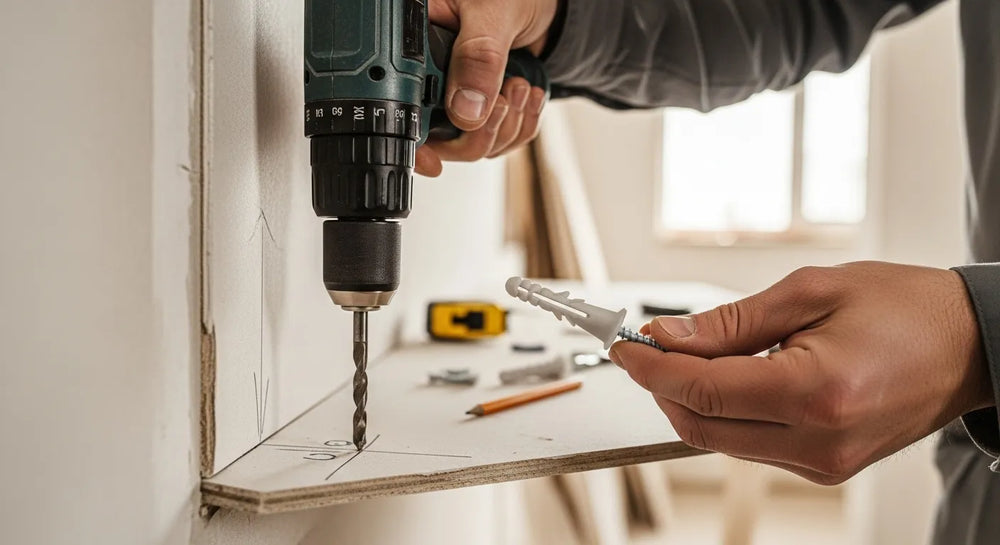
Securely Anchoring to Concrete: A Professional's Guide
Table of Contents
- Introduction
- Understanding Concrete as a Substrate
- Types of Concrete Anchors: A Comprehensive Overview
- Critical Factors for Anchor Selection
- Step-by-Step Installation Guide for Common Anchor Types
- Ensuring Quality and Compliance: The Maden.co Advantage
- Common Pitfalls and How to Avoid Them
- Advanced Considerations for Design Engineers and MRO Buyers
- Financial Agility in Procurement: Maden.co's Instant Financing
- Conclusion
- FAQ: Anchoring to Concrete
Introduction
In industrial and commercial environments, the integrity of a structure often hinges on its smallest, yet most critical, connections. Imagine a heavy piece of machinery vibrating loose from its foundation, a crucial safety barrier failing, or a structural element shifting due to an improperly anchored connection. Such failures are not merely inconveniences; they lead to costly downtime, compromise safety, and can result in significant project delays and regulatory penalties. For procurement managers, MRO buyers, and design engineers, understanding the science and application of concrete anchoring is not just beneficial—it's imperative for operational success and safety compliance.
This comprehensive guide delves into the essential principles and practical considerations of securely anchoring to concrete. We will explore the various types of anchors available, detail the critical factors influencing their selection, walk through best practice installation methods, and highlight common pitfalls to avoid. Our aim is to provide you with the authoritative knowledge necessary to make informed decisions, ensuring the stability, safety, and longevity of your projects. Ultimately, we demonstrate how precise concrete anchoring, backed by reliable, U.S.-made components, is fundamental to building resilient infrastructure and driving the American manufacturing revival.
Understanding Concrete as a Substrate
Before selecting an anchor, it’s crucial to understand the material you’re working with: concrete. Far from being a uniform, inert mass, concrete possesses a complex set of characteristics that significantly influence anchor performance. Its properties, such as compressive strength, aggregate composition, age, and moisture content, all play a pivotal role in determining how an anchor will perform under load.
The Dynamics of Concrete Strength and Curing
Concrete gains strength over time through a process called hydration. While it reaches a significant portion of its design strength within 28 days, its properties can continue to evolve. Anchoring into "green" or uncured concrete presents unique challenges, as its lower compressive strength may not adequately support the stresses induced by certain anchor types. Furthermore, the presence of reinforcing steel (rebar) within the concrete must be considered during drilling to avoid damaging structural elements or compromising the rebar's integrity.
Factors Affecting Anchor Performance in Concrete
Several inherent qualities of concrete directly impact how an anchor will behave:
- Compressive Strength (f’c): This is arguably the most critical factor. Higher compressive strength generally allows for greater anchor capacities. Most anchors are rated for specific concrete strengths (e.g., 2,000 psi to 4,000 psi).
- Aggregate Type: The type and size of aggregate can affect drill bit wear and the consistency of the drilled hole, particularly for expansion-type anchors.
- Cracked vs. Uncracked Concrete: Concrete is typically assumed to be cracked unless proven otherwise. Anchors designed for cracked concrete are engineered to perform reliably even when tension cracks develop in the concrete, which is common under service loads. Using an anchor not rated for cracked concrete in a cracked section can lead to catastrophic failure.
- Presence of Voids or Honeycombing: Inconsistencies in the concrete matrix can severely reduce an anchor’s holding power.
- Edge Distance and Spacing: The distance from the anchor to the edge of the concrete element and the spacing between multiple anchors are critical. Insufficient edge distance or spacing can lead to concrete breakout failure, where a cone of concrete fractures and pulls away from the main structure, significantly reducing the anchor's capacity.
Understanding these foundational characteristics allows for a more informed selection process, ensuring the chosen anchor system is compatible with the specific concrete conditions of your project.
Types of Concrete Anchors: A Comprehensive Overview
The world of concrete anchoring offers a diverse array of solutions, each engineered for specific load types, base material conditions, and environmental factors. For procurement managers and design engineers, differentiating these types is crucial for specifying the correct component and ensuring structural integrity.
Mechanical Anchors
Mechanical anchors achieve their holding power through friction, wedging, or keying mechanisms. They are inserted into a pre-drilled hole and then expanded or set to create a mechanical interlock with the concrete.
Expansion Anchors
Expansion anchors are perhaps the most common category, relying on outward pressure against the walls of the drilled hole to create friction and resist pull-out forces.
- Wedge Anchors: These consist of a threaded rod, a nut, a washer, and an expansion clip. As the nut is tightened, the clip expands, wedging itself into the concrete. Wedge anchors are excellent for heavy-duty applications in solid concrete and are available in various materials for corrosion resistance. They are particularly effective for through-fastening, where the anchor passes through the fixture.
- Sleeve Anchors: Similar to wedge anchors but with a broader range of applications, sleeve anchors consist of a threaded stud, nut, washer, and a metal sleeve that expands as the nut is tightened. They are versatile for light to medium loads and can be used in solid concrete, block, and brick.
- Drop-In Anchors: These female-threaded anchors are flush-mounted and set by driving a setting tool into the anchor, expanding its internal sleeve against the concrete. They are ideal for suspending conduits, sprinkler systems, and pipes from concrete ceilings, offering a secure, flush finish. When considering robust drop-in solutions, the BN Products 3/8 Inch Inside Thread Sanko Drop-In Concrete Anchor exemplifies the quality and reliability you can expect from U.S.-made components, providing a dependable solution for overhead fastening requirements.
- Strike Anchors: Also known as hammer-drive anchors, these are set by hammering a pin into the anchor body, causing it to expand. They are typically used for light-duty applications where speed of installation is a priority.
Undercut Anchors
Undercut anchors create an interlock by machining an inverse cone shape or a bulb at the bottom of the drilled hole. The anchor then expands into this undercut, forming a positive mechanical interlock, which provides superior resistance to pull-out loads compared to expansion anchors, especially in cracked concrete or seismic conditions. While installation requires specialized tooling to create the undercut, their high performance often justifies the additional effort for critical applications.
Adhesive (Chemical) Anchors
Adhesive anchors, also known as chemical anchors or epoxy anchors, rely on a chemical bond between a resin and the concrete, typically used with threaded rods or rebar. The process involves drilling a hole, cleaning it thoroughly, and then injecting a two-part resin that cures and chemically bonds the rod to the concrete.
- Principle of Operation: The chemical bond distributes stress more evenly into the concrete, reducing localized stress concentrations common with mechanical anchors. This makes them ideal for applications requiring high load capacities, close edge distances, or in cracked concrete, as they do not exert expansive stress on the base material.
-
Advantages:
- High load capacity, often exceeding mechanical anchors.
- No expansion stress, making them suitable for close edge and spacing applications.
- Excellent performance in seismic and dynamic load applications.
- Can be used with varying embedment depths to achieve desired load capacities.
-
Application Considerations:
- Hole Cleaning is Critical: Any dust or debris in the hole will compromise the chemical bond. Brushing and blowing out the hole multiple times are essential.
- Temperature: Cure times for resins are temperature-dependent. Cold temperatures slow curing, while hot temperatures accelerate it.
- Moisture: Some resins are more tolerant of wet holes than others, but dry holes generally yield the best performance.
Cast-in-Place Anchors
Cast-in-place anchors are embedded into the concrete before it cures. These are designed into the structure at the time of construction, offering the highest reliability and load capacity, as they become an integral part of the concrete element.
- Principle: These anchors, such as headed studs, J-bolts, or L-bolts, are positioned and secured in the formwork before concrete is poured. Once the concrete cures, they are permanently fixed within the structure.
-
Advantages:
- Highest ultimate load capacity.
- No drilling required post-pour, simplifying installation logistics for new construction.
- Eliminates concerns about concrete strength development after anchoring, as they cure with the concrete.
- Types: Headed anchor bolts, headed studs (shear connectors), and specific types of threaded inserts. For critical applications requiring precise control over anchor installation, specialized tools like a 1-Headed Concrete Anchor Shear Connector Chuck can significantly improve efficiency and accuracy in setting and securing these vital components. Similarly, for comprehensive project needs, a Concrete Anchor Shear Connector Chuck Set ensures you have the right tool for various anchor sizes and project requirements, from initial setup to final fastening.
The selection of the appropriate anchor type is a critical decision that influences safety, project longevity, and overall cost-effectiveness. Our mission at Maden.co is to empower procurement managers with access to the highest quality, U.S.-made components across this diverse range, ensuring you can specify the perfect solution for every application.
Critical Factors for Anchor Selection
Choosing the right concrete anchor is a complex decision that requires a thorough evaluation of numerous factors beyond just the visible structure. A misstep here can lead to premature failure, safety hazards, and costly repairs. For design engineers, procurement managers, and MRO buyers, a systematic approach to anchor selection is non-negotiable.
Load Requirements
The primary consideration is always the nature and magnitude of the loads the anchor will bear.
- Tensile Load: A direct pull-out force, attempting to extract the anchor from the concrete. Examples include suspended loads or uplift forces.
- Shear Load: A force parallel to the concrete surface, attempting to cut or bend the anchor. Examples include horizontal forces from machinery or ledger boards.
- Combined Load: Most real-world applications involve a combination of both tensile and shear forces, requiring anchors rated for such complex stress states.
-
Static vs. Dynamic vs. Seismic Loads:
- Static Loads: Constant or slowly varying loads.
- Dynamic Loads: Varying loads over time, often involving vibration or impact (e.g., heavy machinery, conveyors). These require anchors with excellent fatigue resistance.
- Seismic Loads: Forces generated during an earthquake, requiring specific seismic-rated anchors that can withstand significant cyclic stresses and displacements without brittle failure.
Always apply appropriate safety factors as mandated by local building codes and industry standards (e.g., ACI 318, ICC-ES).
Base Material Characteristics
As discussed, the concrete itself is a critical variable.
- Concrete Strength: Match the anchor's rating to the actual compressive strength of the concrete.
- Cracked vs. Uncracked Concrete: This is paramount. Anchors listed for cracked concrete are tested to perform reliably in a concrete tension zone where cracks up to a certain width may occur. Always assume cracked concrete unless a detailed structural analysis confirms an uncracked condition.
- Edge Distance and Spacing: These geometry considerations are vital to prevent concrete breakout. Each anchor system will have minimum recommended edge distances and spacing requirements to achieve its published load capacities. Ignoring these can lead to significantly reduced performance.
Environmental Conditions
The anchor's environment dictates its material composition and protective coatings.
- Moisture/Humidity: High moisture content or exposure to water requires corrosion-resistant materials like stainless steel (304 or 316) or hot-dip galvanized finishes.
- Chemical Exposure: Industrial environments may expose anchors to acids, alkalis, or other corrosive chemicals, necessitating specialized alloy steels or protective coatings.
- Temperature Extremes: High or low temperatures can affect the performance of some anchor types, particularly adhesive anchors.
- Fire Resistance: In certain applications, anchors must maintain structural integrity during a fire, requiring specific fire-rated components.
Application-Specific Considerations
Beyond the physical and environmental, unique project demands also influence anchor choice.
- Vibration: For machinery that generates significant vibration, anchors with robust mechanical interlocks or high-strength adhesive bonds are preferred to prevent loosening over time.
- Aesthetic Requirements: In visible applications, flush-mounted or aesthetically pleasing anchor systems may be required.
- Regulatory Compliance and Standards: This is where U.S.-made components, sourced from verified manufacturers, provide a significant advantage. Compliance with industry standards like ICC-ES (International Code Council Evaluation Service) reports, ACI (American Concrete Institute) guidelines, ASTM (American Society for Testing and Materials) specifications, and relevant local building codes is non-negotiable. Sourcing American-made products through a transparent marketplace like Maden.co ensures that these critical compliance requirements are met, offering peace of mind to procurement professionals. Our network of 800+ verified U.S. manufacturers upholds the highest standards of Industrial Excellence.
Installation Method and Equipment
The practicality of installation also plays a role in anchor selection.
- Drilling: What type of drill (rotary hammer, hammer drill) and drill bit (carbide-tipped, SDS) are required? Is specialized coring or undercutting equipment necessary?
- Hole Cleaning: The method for removing dust and debris (brushing, blowing, vacuuming) is crucial, especially for adhesive anchors.
- Torque Requirements: Many mechanical anchors have specific torque settings that must be adhered to for proper expansion and maximum holding power. An MRO buyer, facing an unexpected equipment breakdown, needs to quickly find and finance a verified, U.S.-made part, and ensure its proper installation.
By meticulously considering each of these factors, procurement managers and design engineers can confidently select the most appropriate and reliable anchoring solution, leveraging the comprehensive catalog of U.S.-made products available on Maden.co to meet diverse project demands.
Step-by-Step Installation Guide for Common Anchor Types
Proper installation is as critical as selecting the right anchor. Even the highest quality anchor will fail if not installed correctly. This guide provides a general overview; always refer to the manufacturer's specific instructions.
1. Drilling the Hole
- Choose the Correct Drill Bit: Ensure the drill bit matches the anchor diameter precisely. For mechanical anchors, the hole diameter is typically equal to the anchor's diameter. For adhesive anchors, the hole diameter is usually slightly larger than the threaded rod.
- Set the Correct Depth: Mark the drill bit with tape or use a depth stop to ensure the hole is drilled to the manufacturer's specified embedment depth. Drilling too shallow reduces capacity, while too deep can weaken the concrete.
- Use the Right Equipment: A rotary hammer drill is essential for drilling into concrete efficiently. Use a carbide-tipped SDS-plus or SDS-max drill bit.
- Drill Vertically: Maintain a perpendicular angle to the concrete surface unless a specific angled installation is required and engineered.
- Avoid Rebar: Use a rebar locator to avoid drilling into reinforcing steel, which can compromise the structural integrity of the concrete element.
2. Cleaning the Hole (Crucial for All Anchors, Paramount for Adhesive)
This step cannot be overstated, especially for adhesive anchors where a clean bond is paramount.
- Mechanical Cleaning: Use a stiff bristle brush (sized for the hole diameter) to thoroughly scrub the inside walls of the hole.
- Air Cleaning: Use compressed air (oil-free) to blow out all dust and debris from the hole. Repeat the brush-and-blow cycle multiple times until no dust is visible. For critical applications, a vacuum system designed for concrete dust can be used.
3. Inserting and Setting the Anchor
The specifics vary by anchor type:
For Wedge Anchors:
- Insert the anchor through the fixture and into the pre-drilled, cleaned hole until the washer and nut are snug against the fixture.
- Tighten the nut with a torque wrench to the manufacturer's specified torque value. This pulls the anchor stud up, expanding the wedge clip against the concrete, creating the mechanical interlock.
For Sleeve Anchors:
- Similar to wedge anchors, insert the sleeve anchor through the fixture and into the hole.
- Tighten the nut. The sleeve will expand as the nut is tightened, anchoring the fixture.
For Drop-In Anchors (e.g., BN Products 3/8 Inch Inside Thread Sanko Drop-In Concrete Anchor):
- Drill and clean the hole to the exact diameter and depth specified by the manufacturer.
- Insert the BN Products 3/8 Inch Inside Thread Sanko Drop-In Concrete Anchor flush with the concrete surface.
- Use the manufacturer-recommended setting tool. Place the tool into the anchor's internal threads and strike it firmly with a hammer until the anchor's expansion mechanism is fully engaged and it is securely set. This action expands the internal sleeve against the concrete, creating a secure, flush-mounted female thread.
For Adhesive Anchors:
- After thorough hole cleaning, dispense the adhesive resin into the hole, starting from the bottom and slowly withdrawing the nozzle. Fill the hole approximately two-thirds full to ensure full embedment and expulsion of air.
- Immediately insert the threaded rod or rebar into the resin with a twisting motion, ensuring the resin fully coats the rod and fills any remaining voids.
- Allow the adhesive to cure completely, according to the manufacturer's instructions, before applying any load. Cure times are temperature-dependent. Do not disturb the rod during curing.
For critical applications requiring precise control over anchor installation, specialized tools like a 1-Headed Concrete Anchor Shear Connector Chuck can significantly improve efficiency and accuracy in setting and securing these vital components. Similarly, for comprehensive project needs, a Concrete Anchor Shear Connector Chuck Set ensures you have the right tool for various anchor sizes and project requirements, from initial setup to final fastening. Investing in the right tools and strictly following installation protocols are paramount for ensuring reliable and safe concrete anchoring.
Ensuring Quality and Compliance: The Maden.co Advantage
The procurement of concrete anchoring solutions is not merely a transaction; it's a strategic decision that impacts the safety, longevity, and regulatory compliance of your operations. For procurement managers navigating a complex global supply chain, sourcing reliable, compliant anchors can be a significant challenge. This is where Maden.co offers a distinctive advantage, embodying core values that streamline your procurement process and elevate project outcomes.
The Procurement Challenge
In today's industrial landscape, procurement professionals face myriad pressures:
- Quality Assurance: Ensuring components meet stringent performance and safety standards.
- Supply Chain Resilience: Minimizing risks associated with global disruptions and unpredictable lead times.
- Compliance: Adhering to specific industry regulations, building codes, and material certifications.
- Cost-Efficiency: Balancing upfront costs with the long-term Total Cost of Ownership (TCO).
- Access: Finding specialized or hard-to-source components quickly.
These challenges are amplified when critical infrastructure depends on the integrity of every single anchor.
Our Mission: Democratizing Access to American Manufacturing
At Maden.co, our mission is to democratize access to American manufacturing, making it easier than ever for industrial buyers to connect with the unparalleled quality and reliability of U.S.-made products. We believe that America's manufacturing revival is here, and we are at the forefront, powering this resurgence by providing a robust platform for buyers and manufacturers alike. We simplify the sourcing process, enabling you to procure high-performance concrete anchors and related tools with confidence.
Supply Chain Transparency and Industrial Excellence
Our commitment to Supply Chain Transparency means you know exactly where your components come from. We connect industrial buyers with over 2.5 million American-made products from our network of 800+ verified U.S. manufacturers. This verification process ensures that every product, from a specialized anchor to a complete chuck set, meets rigorous standards of Industrial Excellence. When a design engineer needs specific material certifications for a new prototype, or an MRO buyer faces an unexpected equipment breakdown requiring a verified, U.S.-made part, the ability to quickly find and finance such components through our platform is a game-changer. Our suppliers are committed to meeting critical industry standards (e.g., DIN, NPT), ensuring your projects comply with the highest benchmarks.
Customer Empowerment and Strategic Partnership
We focus on Customer Empowerment by reducing procurement friction. Our platform is designed to be intuitive and efficient, saving you valuable time and resources. By partnering with Maden.co, you're not just buying parts; you're investing in a more reliable and efficient procurement process that enhances your supply chain resilience. This strategic approach improves your Total Cost of Ownership (TCO) by reducing risks associated with product failure, extended lead times, and non-compliance. Our entire business model is built on this principle; you can learn more about our mission to champion American manufacturing and understand how we bring these values to life.
For qualified U.S. manufacturers who share our vision for American Manufacturing Pride and Digital Innovation, we invite you to join our growing network. Register as a vendor and become a vital part of America's manufacturing revival, connecting with a vast network of industrial buyers eager for quality American-made components.
By choosing Maden.co, you are selecting a strategic partner dedicated to fostering a robust domestic supply chain, providing access to superior products, and ensuring your anchoring projects stand on the firmest possible foundations.
Common Pitfalls and How to Avoid Them
Even with the best intentions, errors in concrete anchoring can occur, leading to compromised structural integrity and potential hazards. Awareness of common pitfalls is the first step in avoiding them.
- Incorrect Drill Bit Size or Depth: Using a drill bit that is too small will prevent the anchor from properly seating; too large, and the anchor won't achieve its required expansion or bond. Incorrect depth can reduce embedment and load capacity. Always verify manufacturer specifications for both diameter and depth.
- Poor Hole Cleaning: This is a leading cause of adhesive anchor failure and significantly reduces the performance of mechanical anchors. Dust acts as a bond breaker for chemical anchors and prevents proper expansion for mechanical ones. Implement a strict brush-and-blow (or vacuum) cleaning protocol, especially for adhesive applications.
- Over-Torquing or Under-Torquing: Mechanical anchors require specific torque values. Over-torquing can strip threads or damage the concrete, while under-torquing leads to insufficient expansion and reduced holding power. Use a calibrated torque wrench and adhere strictly to manufacturer-specified torque values.
- Ignoring Edge Distance and Spacing: Violating minimum edge distance and spacing requirements can lead to concrete breakout failures, dramatically reducing the anchor's capacity. Consult anchor specifications and adhere to recommended distances, or obtain specific engineering calculations for reduced distances.
- Using the Wrong Anchor Type for the Application: Attempting to use a light-duty anchor for heavy loads, a non-seismic anchor in a seismic zone, or an anchor not rated for cracked concrete in a tension zone are all critical errors. Thoroughly assess load requirements, base material conditions (cracked/uncracked), and environmental factors before selection.
- Lack of Environmental Consideration: Using carbon steel anchors in wet or corrosive environments will inevitably lead to premature corrosion and failure. Always specify materials (e.g., stainless steel, galvanized) appropriate for the expected environmental conditions.
- Ignoring Cure Times for Adhesive Anchors: Applying load to an adhesive anchor before it has fully cured can compromise the chemical bond and lead to immediate failure. Respect the manufacturer's specified cure times, which are dependent on temperature.
- Damaging Reinforcing Steel: Drilling into rebar can compromise the structural integrity of the concrete element. Always use a rebar locator to identify and avoid embedded steel.
By proactively addressing these common pitfalls, procurement managers, MRO buyers, and design engineers can significantly enhance the reliability and safety of their concrete anchoring projects, avoiding costly rework and potential liabilities.
Advanced Considerations for Design Engineers and MRO Buyers
For those deeply involved in the design and maintenance of industrial infrastructure, specific advanced considerations elevate the precision and safety of concrete anchoring beyond basic installation.
Post-Installed Reinforcing Bars
Beyond traditional anchoring, post-installed reinforcing bars (rebar dowels) are a critical application, often used to connect new concrete elements to existing ones, such as adding a new slab to an existing wall or extending a column. This involves drilling into existing concrete and anchoring rebar using high-strength adhesive systems. Design engineers must specify the correct adhesive system, embedment depth, and rebar size based on structural calculations, adhering to ACI 318 Appendix D or relevant building codes, which provide detailed provisions for these critical connections. The thorough cleaning protocols for adhesive anchors are especially vital here to ensure full structural integrity.
Seismic Design
In regions prone to seismic activity, anchors must be specifically designed and qualified to withstand dynamic, cyclic loading. Seismic-rated anchors undergo rigorous testing to demonstrate their performance in cracked concrete under simulated earthquake conditions. Design engineers must specify anchors with ICC-ES (International Code Council Evaluation Service) reports that explicitly state seismic qualification, often categorized as Seismic Design Category A through F. MRO buyers in these regions must ensure that any replacement anchors or new installations also meet these stringent seismic requirements to maintain structural safety and compliance.
Fire Resistance
In buildings requiring specific fire resistance ratings, anchors supporting critical elements (e.g., fire-rated barriers, sprinkler systems, emergency lighting) must also maintain their load-carrying capacity during a fire event. This often requires anchors made from materials that can withstand high temperatures without significant loss of strength. Design engineers specify fire-rated anchor systems based on prescriptive code requirements or performance-based testing, ensuring that critical support structures remain intact during an emergency.
Anchoring in Cracked vs. Uncracked Concrete: Code Provisions
The distinction between cracked and uncracked concrete is not merely theoretical; it's a fundamental aspect of anchor design governed by codes like ACI 318 Appendix D. Uncracked concrete is a tension-free zone, while cracked concrete is subject to tensile stresses that can induce cracks. Anchors perform differently in each scenario. Designers must assume cracked concrete conditions unless detailed analysis proves otherwise. This often means selecting anchors explicitly qualified for cracked concrete, which are engineered to maintain performance even when tension cracks occur around the anchor, providing a higher level of safety and reliability.
Fatigue and Dynamic Loads
Machinery, cranes, and other equipment can impart dynamic loads and vibrations that, over time, can lead to fatigue failure in anchors not designed for such conditions. For these applications, selecting anchors with robust mechanical interlocks (like undercut anchors) or high-strength chemical bonds is crucial. Considerations include the number of load cycles, the magnitude of the dynamic loads, and the potential for anchor loosening. Design engineers must specify anchors with proven fatigue resistance, often involving specific testing and material properties that can withstand repetitive stress without degrading. This ensures long-term operational integrity and reduces maintenance overhead for MRO professionals.
Navigating these advanced considerations requires a deep understanding of engineering principles, material science, and regulatory compliance. At Maden.co, we are committed to providing the detailed specifications and access to certified U.S.-made products that meet these elevated demands, supporting engineers and MRO buyers in building and maintaining resilient, high-performance industrial assets. If you have specific sourcing questions related to these complex scenarios, our team is ready to help; you can contact us for expert guidance.
Financial Agility in Procurement: Maden.co's Instant Financing
In the world of industrial procurement, managing cash flow effectively is as critical as securing the right components. Large-volume purchases of essential anchoring systems or specialized tools for capital-intensive projects can strain a company's working capital. Recognizing this, Maden.co offers a key differentiator: Instant Financing.
This feature is not merely a payment option; it's a strategic tool designed to empower procurement managers and business owners to optimize their capital allocation and accelerate project timelines. Instead of delaying crucial purchases due to immediate budgetary constraints, Instant Financing provides the flexibility to acquire necessary U.S.-made products when they are needed most.
How Instant Financing Benefits Your Business:
- Cash Flow Management: Make larger, strategic purchases without tying up significant upfront capital, freeing up cash for other operational needs.
- Project Acceleration: Avoid project delays caused by waiting for budget cycles or conventional financing approvals. Secure the materials you need, when you need them.
- Volume Purchase Advantages: Take advantage of bulk pricing or ensure inventory levels for ongoing projects without impacting immediate liquidity.
- Simplicity and Speed: Unlike traditional financing, our Instant Financing option is seamlessly integrated into the checkout process. This means quick approval, minimal paperwork, and immediate access to funds, simplifying the entire procurement workflow.
For a procurement manager under pressure to source a specific DIN 931 compliant hex cap screw, or a business owner needing to equip a new production line with essential anchoring components, the ability to quickly find and finance a verified, U.S.-made part is a game-changer. It reduces the friction often associated with large purchases, allowing you to focus on project execution rather than financial hurdles.
Our commitment to Digital Innovation extends to every facet of our platform, ensuring that solutions like Instant Financing are not only available but also easy to access and utilize. It’s part of our dedication to Customer Empowerment, providing you with the tools to navigate the complexities of industrial procurement with greater agility.
Conclusion
The act of anchoring something to concrete transcends a simple fastening task; it is a foundational element of industrial safety, structural integrity, and operational longevity. From selecting the appropriate anchor type based on meticulous load calculations and environmental considerations to executing precise installation techniques, every step demands expertise and access to reliable, high-quality components. Neglecting these critical aspects can lead to severe consequences, highlighting the paramount importance of informed decisions in procurement and engineering.
The strength of American manufacturing provides a steadfast assurance of quality, compliance, and innovation. At Maden.co, we are proud to be at the forefront of this revival, connecting industrial buyers with an expansive network of verified U.S. manufacturers. Our platform embodies American Manufacturing Pride, offering unparalleled Supply Chain Transparency and Industrial Excellence in every product, from the simplest anchor to the most specialized tooling. We are dedicated to empowering our customers by enhancing supply chain resilience and streamlining the procurement process, ultimately improving your Total Cost of Ownership.
We encourage you to explore the extensive catalog of U.S.-made products on Maden.co. Whether you require high-strength mechanical anchors, advanced adhesive systems, or specialized installation tools, our platform is designed to meet your most demanding specifications. Take advantage of our intuitive search, detailed product information, and the strategic flexibility offered by our Instant Financing option available at checkout. This allows you to manage capital-intensive projects with greater agility, ensuring your operations remain efficient, compliant, and secure. Join us in building a stronger future, anchored firmly in American-made quality.
FAQ: Anchoring to Concrete
Q1: What is the most common reason for anchor failure in concrete?
A1: The most common reasons for anchor failure include incorrect selection of anchor type for the specific load or concrete condition (e.g., using an uncracked-rated anchor in cracked concrete), improper installation (such as insufficient hole cleaning or incorrect torque), and inadequate consideration of edge distance and spacing. Environmental factors like corrosion in moist conditions can also lead to premature failure.
Q2: How can I determine if my concrete is "cracked" or "uncracked" for anchor selection?
A2: For most industrial applications, unless a detailed structural analysis by a qualified engineer explicitly confirms that the concrete remains in an uncracked tension-free zone under all service loads, it should be assumed to be cracked. This is a conservative and safe approach, as most concrete elements will develop cracks under normal loading conditions. Always specify anchors qualified for cracked concrete for critical applications to ensure reliability.
Q3: Why is thorough hole cleaning so important for concrete anchors, especially adhesive types?
A3: For adhesive anchors, any dust or debris in the drilled hole acts as a bond breaker, preventing the chemical resin from forming a strong, reliable bond with the concrete. This can significantly reduce the anchor's load capacity and lead to catastrophic failure. For mechanical anchors, excessive dust can interfere with the proper expansion mechanism, reducing friction and interlock with the concrete. Proper cleaning—typically involving brushing and blowing out the hole multiple times—is essential for achieving published load values and ensuring long-term performance.
Q4: Does Maden.co offer anchors that meet specific industry standards like ICC-ES or ACI 318?
A4: Yes, Maden.co is dedicated to offering products from verified U.S. manufacturers who adhere to the highest industry standards. Our vast network includes suppliers providing anchors and related components that carry certifications such as ICC-ES (International Code Council Evaluation Service) reports and comply with ACI (American Concrete Institute) guidelines, including ACI 318 Appendix D. We prioritize Industrial Excellence and Supply Chain Transparency, ensuring that you have access to fully compliant and certified U.S.-made solutions for your critical projects.


