
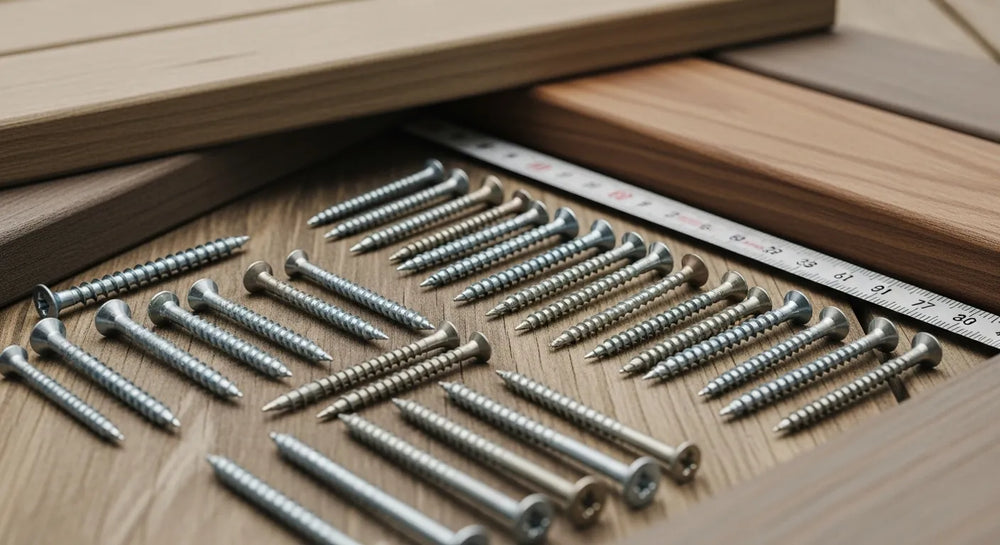
Understanding the Pan Head Wood Screw
Table of Contents
- Introduction
- Deconstructing the Wood Screw: An Overview
- What is a Pan Head Wood Screw? Defining Its Distinctive Features
- Key Characteristics and Undeniable Benefits of Pan Head Wood Screws
- Common Applications for Pan Head Wood Screws
- Material Science: Choosing the Right Pan Head Wood Screw Material
- Drive Types for Pan Head Wood Screws
- Sizing and Dimensions: Precision in Procurement
- Installation Best Practices for Pan Head Wood Screws
- The Strategic Value of Sourcing American-Made Wood Screws
- Beyond the Screw: The Maden.co Advantage for Procurement
- Conclusion
- FAQ
Introduction
In the intricate world of industrial procurement and design, the seemingly minor choice of a fastener can profoundly impact a project's integrity, longevity, and even its financial viability. Imagine a scenario where a critical component fails, not due to a flaw in the primary design, but because an unsuitable screw was used. The cascading effects—from production delays and costly rework to compromised product safety and reputational damage—can be substantial. This underscores the paramount importance of understanding every detail of the fasteners we select. Today, we turn our attention to a ubiquitous yet often underestimated component: the pan head wood screw. This blog post will meticulously explore what defines a pan head wood screw, delve into its unique characteristics, unpack its myriad applications across various industries, and guide you through selecting the right material and drive type for your specific needs. We’ll also highlight how strategic sourcing, particularly through platforms dedicated to American-made products, can significantly enhance supply chain resilience and overall project success. Our aim is to equip procurement managers, MRO buyers, and design engineers with the authoritative knowledge needed to make informed decisions, ensuring every connection in your operation is as robust as possible.
Deconstructing the Wood Screw: An Overview
Before diving specifically into the pan head variant, it's essential to understand the fundamental anatomy of a wood screw. Unlike machine screws or bolts, wood screws are designed with a specific purpose: to create their own mating threads in wood or composite materials, forming a strong, durable connection. This capability is primarily due to several key features:
- Thread Design: Wood screws typically feature a coarse, sharp thread that tapers to a point. This design allows them to penetrate wood fibers without requiring a pre-tapped hole (though pilot holes are often recommended for optimal performance and to prevent splitting). The threads create a powerful grip within the wood, holding components securely together.
- Shank: The unthreaded portion of the screw directly beneath the head is known as the shank. While some wood screws are fully threaded, many feature a partial shank designed to allow the wood pieces to be pulled tightly together before the threads fully engage, creating a stronger clamp.
- Point: The tip of the screw, often sharp or self-tapping, is crucial for initial penetration into the material. Different point types exist, from gimlet points (sharp and tapered) to self-drilling points that can even eliminate the need for a pilot hole in softer woods.
Understanding these basic elements provides the foundation for appreciating the specialized role and advantages of different screw types, including the distinct pan head.
What is a Pan Head Wood Screw? Defining Its Distinctive Features
The "head" of a screw is the part that applies force to the material and houses the drive type (e.g., Phillips, slotted). Among the various head designs, the pan head stands out due to its unique profile, which resembles an inverted, shallow pan.
The Pan Head Profile
A pan head is characterized by:
- A Slightly Rounded Top: Unlike a flat head which is completely flush, or an oval head which has a more pronounced dome, the pan head features a gently rounded or slightly conical top surface.
- Flat Underside: Crucially, the underside of a pan head is flat and broad. This flat bearing surface is designed to sit directly on top of the material, applying consistent clamping pressure over a wider area than many other head types.
- Vertical Sides: The sides of the pan head are typically vertical or slightly tapered, offering a clean, industrial appearance.
This combination of a rounded top and a flat, broad underside provides specific advantages that differentiate it from other common screw head types.
Comparing Pan Heads to Other Wood Screw Head Types
To truly appreciate the pan head, it's helpful to compare it with its counterparts:
-
Flat Head (Countersunk Head): Designed to sit flush with or below the surface of the material. This requires a countersink hole to be drilled, making it ideal for applications where a smooth, snag-free finish is critical.
- Example Application: Attaching hinges or cabinet backings where the screw head must not protrude.
- Maden.co connection: For projects requiring this flush finish in specific materials, consider high-quality U.S.-made options like our Flat Slot Drive Brass Wood Screw, which offers both aesthetic appeal and corrosion resistance.
-
Round Head: Features a fully hemispherical or domed top. It sits proud of the surface and is often chosen for decorative purposes or when extra bearing surface isn't strictly necessary, but a prominent head is acceptable.
- Example Application: Decorative hardware, or where a slight protrusion is part of the design.
- Maden.co connection: For a traditional, robust, and visually distinct fastener, our Round Slot Drive Brass Wood Screw provides excellent performance and a classic appearance.
-
Oval Head (Raised Countersunk Head): A hybrid of flat and round heads. It requires a countersink, but its top portion is slightly domed, providing a more decorative finish than a flat head while still reducing protrusion.
- Example Application: Furniture with exposed fasteners that need a refined look.
- Maden.co connection: When the application demands superior corrosion resistance alongside a clean, slightly decorative finish, exploring options like our Oval Slot Drive Silicon Bronze Wood Screw ensures both durability and aesthetic quality.
- Truss Head: Characterized by a very wide, low-profile, domed head. It offers an even broader bearing surface than a pan head, distributing pressure over a larger area, which is beneficial for thin or soft materials.
- Hex Head: Designed to be driven with a wrench or socket. Hex heads provide superior torque capabilities and are often used in heavy-duty applications where maximum clamping force is required.
The pan head strikes a balance, offering good bearing surface without the need for countersinking, making it a versatile choice for many applications where a slightly raised head is acceptable.
Key Characteristics and Undeniable Benefits of Pan Head Wood Screws
The unique design of the pan head translates into several distinct advantages, making it a preferred choice for numerous industrial and commercial applications.
1. Superior Bearing Surface and Clamping Force
The most significant advantage of a pan head is its broad, flat underside. This design distributes the clamping force over a larger surface area of the material compared to screws with smaller head diameters.
- Reduced Material Compression: By spreading the load, pan heads minimize the risk of over-compressing or damaging softer materials like particle board, MDF, or thinner wood veneers, particularly when dealing with high torque.
- Enhanced Pull-Through Resistance: The larger bearing surface significantly increases the screw's resistance to pulling through the material, making for a more secure and durable joint, especially in applications subject to vibration or dynamic loads.
- Stable Connection: For general assembly, cabinetry, and attaching hardware, this broad contact surface ensures a very stable and rigid connection, preventing components from shifting over time.
2. Resistance to Cam-Out and Stripping
Many pan head screws feature deep recesses for Phillips, square (Robertson), or Torx drives. Combined with the head's sturdy profile, this design inherently offers better engagement with the driver bit.
- Minimized Cam-Out: The deep drive recess and the vertical sides of the pan head reduce the likelihood of the driver bit slipping out (cam-out) during installation, especially when using power tools. This protects both the screw head and the workpiece.
- Extended Tool Life: Less cam-out means less wear and tear on driver bits, leading to longer tool life and more efficient operations.
- Improved Installation Efficiency: For MRO buyers overseeing routine maintenance or procurement managers specifying fasteners for production lines, the resistance to stripping and cam-out translates directly into faster, more reliable installation, reducing labor costs and rework.
3. Versatility Across Applications
The pan head's robust and functional design makes it incredibly versatile. It's suitable for a wide range of materials beyond just solid wood, including plywood, particle board, composites, and plastics. Its non-countersinking nature simplifies installation, as no additional drilling step is required to prepare a flush seating for the head.
4. Aesthetically Acceptable Protrusion
While not flush, the relatively low and gently rounded profile of a pan head is often aesthetically acceptable or even preferred in certain contexts. For many industrial assemblies, structural components, or internal frameworks, a perfectly flush finish isn't a priority, making the pan head an efficient and appropriate choice. The clean lines of a well-seated pan head can even contribute to a professional, finished look in some applications.
5. Ease of Removal and Reusability
Compared to countersunk heads, which can sometimes be difficult to extract if the material around them is damaged, the proud nature of the pan head makes it easier to grip with pliers or other tools if the drive recess is compromised. This can be a significant advantage in MRO scenarios where components might need to be periodically disassembled for maintenance or replacement, leading to better lifecycle management for equipment.
Common Applications for Pan Head Wood Screws
The attributes of pan head wood screws make them indispensable across a vast array of industries and applications.
1. Cabinetry and Furniture Assembly
This is perhaps one of the most common applications. Pan head screws are widely used for:
- Attaching backs to cabinets: The broad head prevents pull-through, especially on thin plywood or fiberboard.
- Securing internal shelves or drawer slides: They provide a strong connection without requiring precise countersinking.
- General framework assembly: Where strength and ease of installation are prioritized over a completely flush finish.
2. General Woodworking Projects
From DIY enthusiasts to professional carpenters, pan head screws are a go-to fastener for:
- Joining two pieces of wood: Their clamping force creates a reliable bond.
- Building frames, boxes, and jigs: They offer structural integrity with straightforward installation.
- Attaching trim or molding: In situations where the screw head can be decorative or easily concealed.
3. Attaching Hardware
Pan head screws are excellent for mounting various types of hardware onto wooden surfaces:
- Hinges and latches: Their broad heads ensure secure attachment and distribute stress effectively.
- Brackets and mounting plates: Providing robust support for shelves, light fixtures, or other components.
- Handles and pulls: Offering a firm connection that can withstand repeated use.
4. Electrical and HVAC Installations
In certain non-load-bearing electrical box mounting or HVAC ductwork applications where wood framing is involved, pan head screws can be utilized. Their ability to provide a secure grip on the wood without requiring specialized tools for countersinking simplifies installation for field technicians.
5. Marine and Outdoor Applications (with appropriate materials)
When specified in corrosion-resistant materials like stainless steel or silicon bronze, pan head wood screws are invaluable in marine environments for boat building, dock construction, or outdoor furniture. Their robust head design holds up well against the elements and provides strong connections in environments prone to moisture and salt. For superior performance in such demanding conditions, we offer high-quality, U.S.-made fasteners, including options like our Oval Slot Drive Silicon Bronze Wood Screw, specifically chosen for its exceptional durability.
Material Science: Choosing the Right Pan Head Wood Screw Material
The material of a pan head wood screw is as critical as its head design, influencing its strength, corrosion resistance, and suitability for specific environments.
1. Steel (Various Coatings)
- Plain Steel: Least expensive, but highly susceptible to rust. Generally only suitable for dry, indoor, temporary applications.
- Zinc-Plated Steel: A very common choice. The zinc coating provides good corrosion resistance in dry to moderately humid indoor environments. It's ideal for general purpose woodworking, furniture, and light construction.
- Black Oxide Coated Steel: Offers minimal corrosion resistance but provides a dark, often decorative finish. Used where aesthetics or glare reduction are important.
- Phosphate Coated Steel: Often used for drywall screws, offers some corrosion resistance and better adhesion for paint or finishes.
2. Stainless Steel (304, 316)
For applications exposed to moisture, chemicals, or outdoor elements, stainless steel is the material of choice.
- 304 Stainless Steel: Offers excellent corrosion resistance, making it suitable for most outdoor applications, including decking, fencing, and general construction where rust is a concern. It resists oxidation well.
- 316 Stainless Steel: Known as "marine grade" stainless steel, 316 contains molybdenum, which provides superior resistance to chlorides and salt water corrosion. This makes it indispensable for marine applications, coastal construction, and environments with high chemical exposure. While requiring a higher initial investment, the long-term cost savings from reduced maintenance and replacement often justify the choice for critical infrastructure.
3. Brass
Brass screws are primarily chosen for their aesthetic appeal and inherent corrosion resistance, though they are softer than steel or stainless steel.
- Aesthetics: Brass offers a warm, golden appearance that ages beautifully, often chosen for antique furniture restoration, decorative hardware, or where a classic look is desired.
- Corrosion Resistance: It performs well in moderately damp environments and is often resistant to certain chemicals.
-
Considerations: Due to its softness, brass screws can be more prone to stripping if over-torqued. Pilot holes are almost always recommended.
- For projects demanding both visual appeal and reliable performance in suitable applications, high-quality American-made brass wood screws are an excellent option. For example, our Round Slot Drive Brass Wood Screw combines traditional aesthetics with robust functionality, and our Flat Slot Drive Brass Wood Screw provides a refined, flush finish.
4. Silicon Bronze
For the most demanding marine and outdoor environments, silicon bronze stands out.
- Superior Corrosion Resistance: Even better than 316 stainless steel in certain saltwater applications and highly corrosive chemical environments. It forms a protective patina over time.
- Durability: While softer than steel, it is stronger than brass and offers excellent longevity.
-
Applications: Preferred for boat building, historical restorations, and high-end outdoor furniture where extreme durability and a distinguished appearance are paramount.
- When your project demands the highest level of corrosion resistance for wood, particularly in marine or extreme outdoor settings, consider sourcing exceptional U.S.-made silicon bronze fasteners. Our Oval Slot Drive Silicon Bronze Wood Screw exemplifies the quality and performance required for such critical applications.
5. Other Specialty Materials
Depending on the specific industrial need, other materials like aluminum (lightweight, moderate corrosion resistance) or various coated alloys might be used for pan head wood screws, each selected for a unique balance of properties.
Drive Types for Pan Head Wood Screws
The drive type, or the recess in the screw head that accepts a driver, is crucial for efficient installation and plays a role in preventing cam-out. Pan head wood screws are available with most common drive types:
- Slotted Drive: The oldest and simplest drive type, featuring a single slot. Prone to cam-out and less efficient for power tools.
- Phillips Drive: The most common drive type globally, designed to cam out at a certain torque to prevent overtightening. Easy to use but can still cam out under high torque.
- Pozi Drive: Similar to Phillips but with additional smaller slots, providing better grip and reducing cam-out compared to standard Phillips. Less common in North America.
- Square Drive (Robertson): Highly popular in woodworking, especially in Canada. It offers excellent resistance to cam-out, allowing for strong torque without slipping. This drive type is particularly favored for its secure grip and ease of use with one hand.
- Torx Drive (Star Drive): Offers the best resistance to cam-out, transferring torque very efficiently. Increasingly popular in construction and automotive industries for its reliability and ability to withstand high torque.
Choosing the appropriate drive type depends on the required torque, the environment of installation, and the tools available. For industrial applications, square and Torx drives are often preferred for their robustness and efficiency.
Sizing and Dimensions: Precision in Procurement
Accurate sizing is paramount for the performance of a wood screw. Pan head wood screws, like others, are defined by two primary dimensions:
1. Diameter (Gauge Number)
The screw's diameter is typically expressed as a gauge number (e.g., #6, #8, #10). Higher gauge numbers indicate a larger diameter.
- Function: The diameter determines the screw's shear strength and the amount of material it displaces, directly impacting the holding power.
- Selection: Match the diameter to the thickness of the material and the expected load. Larger diameters provide greater strength but require larger pilot holes and can split thinner woods.
2. Length
The screw's length is measured from the underside of the head (for pan heads) to the tip of the point.
- Function: The length dictates how deep the screw penetrates the material, which is critical for the joint's strength. As a general rule for wood-to-wood connections, the screw should penetrate the base material by at least two-thirds the thickness of the top material, and ideally into the base material by at least half of the total screw length.
- Selection: Ensure the length is sufficient to create a strong joint without protruding through the other side of the material. Consider the total thickness of the materials being joined.
3. Thread Pitch
While less frequently specified for standard wood screws, the thread pitch (the distance between threads) influences installation speed and holding power. Coarse threads are standard for wood, offering quick engagement and strong grip.
Installation Best Practices for Pan Head Wood Screws
Proper installation is key to harnessing the full potential of any pan head wood screw.
1. The Importance of Pilot Holes
For most pan head wood screw applications, especially in hardwoods, dense composites, or near edges, drilling a pilot hole is critical.
- Prevents Splitting: Pilot holes relieve pressure as the screw enters, preventing the wood from splitting, which is crucial for structural integrity and aesthetics.
- Aids Straight Driving: They guide the screw, ensuring it drives straight and prevents wandering, leading to a neater and stronger connection.
- Reduces Torque: A pilot hole reduces the friction and torque required for driving, minimizing the risk of stripping the screw head, especially for softer materials like brass.
- Sizing: The pilot hole diameter should be slightly smaller than the screw's minor (core) diameter to allow the threads to bite firmly into the wood. For hardwoods, a slightly larger pilot hole may be necessary.
2. Choosing the Right Driver Bit
Always use the correct size and type of driver bit that precisely fits the screw head recess. A mismatched bit increases the risk of cam-out, stripping the screw head, and damaging the material. Magnetic bit holders can significantly improve efficiency by preventing screws from falling off the bit.
3. Controlling Torque
Whether using hand tools or power drills, controlling the driving torque is essential.
- Avoid Overtightening: Overtightening can strip the screw threads in the wood, making the joint loose, or even shear off the screw head itself. For pan head screws, overtightening can also crush the wood fibers beneath the head, compromising the bearing surface.
- Appropriate Speed: When using power tools, start with a lower speed for initial engagement and gradually increase it. Use a drill with a clutch setting if available to prevent overtightening.
4. Consistent Depth
While pan heads sit proud, aim for consistent driving depth across multiple screws for a uniform, professional finish and even distribution of load.
The Strategic Value of Sourcing American-Made Wood Screws
For procurement managers, MRO buyers, and design engineers, the choice of where and how to source fasteners extends far beyond just the product specifications. It delves into the resilience of the supply chain, the reliability of quality, and the strategic advantages that underpin long-term operational success. At Maden.co, we champion the profound benefits of sourcing American-made products, and this philosophy is particularly pertinent when it comes to essential components like pan head wood screws.
1. Bolstering Supply Chain Resilience
The global supply chain disruptions of recent years have unequivocally demonstrated the vulnerabilities of relying solely on distant, complex sourcing networks. Sourcing U.S.-manufactured pan head wood screws provides:
- Reduced Lead Times: Shorter geographical distances translate into faster delivery, critical for just-in-time inventory management and responding swiftly to unexpected project demands or MRO emergencies.
- Mitigated Geopolitical Risks: Local sourcing reduces exposure to international trade disputes, customs delays, and shipping disruptions that can halt production.
- Greater Visibility and Control: Direct engagement with U.S. manufacturers offers clearer insights into production schedules and quality control, enabling more responsive procurement strategies. For a procurement manager under pressure to source a specific DIN 931 compliant hex cap screw, a design engineer needing specific material certifications for a new prototype, or an MRO buyer facing an unexpected equipment breakdown, the ability to quickly find and finance a verified, U.S.-made part is a game-changer for maintaining operational continuity.
2. Uncompromising Quality and Consistency
American manufacturing is synonymous with stringent quality control and adherence to precise industry standards (e.g., ANSI, ASTM). When you source pan head wood screws from U.S. manufacturers, you benefit from:
- Reliable Performance: Consistent material composition, precise threading, and accurate head dimensions ensure every screw performs as expected, reducing defects and rework.
- Certified Compliance: U.S. manufacturers often provide detailed material certifications and traceability, which is vital for projects requiring specific compliance standards or for end products with liability implications.
- Innovation and Expertise: American manufacturers continually invest in advanced technologies and processes, leading to innovative fastener solutions and specialized coatings that enhance performance and durability.
3. Supporting the American Manufacturing Revival
Choosing American-made products is a commitment to strengthening the domestic industrial base. At Maden.co, our mission is to democratize access to American manufacturing. We believe that by connecting industrial buyers with over 2.5 million American-made products from our network of 800+ verified U.S. manufacturers, we can collectively drive the manufacturing revival. Our vision is to become the definitive platform that proves American-made components are as accessible and convenient as any global alternative. This isn't just about economic patriotism; it's about fostering an ecosystem where innovation thrives, jobs are created, and the future of industrial excellence is secured. Our entire business model is built on this principle; you can learn more about our mission to champion American manufacturing here.
4. Enhanced Industrial Excellence and Customer Empowerment
Our core values—American Manufacturing Pride, Digital Innovation, Supply Chain Transparency, Industrial Excellence, and Customer Empowerment—are not just ideals; they are the bedrock of our platform. By leveraging our digital marketplace, industrial buyers are empowered to:
- Find Hard-to-Source Parts: Our extensive catalog means you can quickly locate specialized pan head wood screws, in specific materials or dimensions, that might be difficult to find elsewhere.
- Streamline Procurement: Our intuitive platform reduces the friction often associated with B2B purchasing, saving valuable time and resources.
- Build Stronger Partnerships: We connect you directly with verified U.S. manufacturers, fostering relationships built on trust and shared values.
This strategic partnership approach contributes directly to improving your Total Cost of Ownership (TCO) by reducing hidden costs associated with delays, quality issues, and complex international logistics.
Beyond the Screw: The Maden.co Advantage for Procurement
The simple act of specifying and acquiring a pan head wood screw, when viewed through a strategic lens, can unlock significant efficiencies and reinforce a robust supply chain. At Maden.co, we are more than just a marketplace; we are a strategic partner committed to enhancing your procurement process and empowering your business.
Our platform is engineered to simplify the complex B2B sourcing landscape. We provide a single, reliable point of access to an unparalleled selection of high-quality, U.S.-made industrial components. This translates into tangible benefits for our customers:
- Unrivaled Selection: Access to millions of products means you're more likely to find the exact pan head wood screw—or any other fastener—you need, complete with detailed specifications and certifications.
- Verified Manufacturers: Every U.S. manufacturer on our platform is rigorously vetted, ensuring that the products you procure meet the highest standards of quality and reliability.
- Digital Innovation: Our user-friendly interface, powerful search capabilities, and streamlined ordering process leverage digital innovation to make procurement efficient and transparent.
Instant Financing: A Strategic Tool for Cash Flow Management
Recognizing the capital-intensive nature of industrial procurement, we offer a key differentiator: Instant Financing. This feature is not merely a payment option; it's a strategic tool designed to help businesses manage cash flow effectively and facilitate larger-volume purchases without immediate upfront capital expenditure. Whether you're undertaking a major project that requires substantial upfront investment in fasteners or need to stock up on high-demand pan head wood screws, Instant Financing provides the flexibility to acquire what you need, when you need it, preserving your working capital. You can apply for Instant Financing at checkout to streamline your capital-intensive projects.
This capability underscores our commitment to Customer Empowerment, ensuring that financial constraints do not impede your access to essential American-made industrial supplies.
For U.S. manufacturers looking to expand their reach and join a growing network dedicated to industrial excellence, we invite you to be part of this movement. Are you a U.S. manufacturer? Register as a vendor and join the American manufacturing revival.
We believe that by making American manufacturing accessible and convenient, we contribute directly to your success and the resurgence of domestic industry. If you have specific sourcing questions or need assistance navigating our extensive catalog, our team is ready to help. Contact Us.
Conclusion
The pan head wood screw, while a seemingly small component, is a powerful example of how thoughtful fastener selection can significantly impact the success and longevity of industrial projects. Its unique design, offering superior bearing surface, resistance to cam-out, and versatility across diverse applications, makes it an indispensable tool for engineers, manufacturers, and maintenance professionals alike. From the foundational strength it provides in cabinetry to its critical role in outdoor and marine applications when crafted from materials like silicon bronze, understanding the pan head's nuances is key to optimal performance.
Beyond the technical specifications, the strategic choice to source American-made fasteners represents an investment in supply chain resilience, assured quality, and the broader revitalisation of domestic industry. At Maden.co, we are proud to be at the forefront of this movement, connecting industrial buyers with millions of high-quality, U.S.-manufactured products. We empower you to make informed decisions, streamline your procurement processes, and leverage tools like Instant Financing to keep your projects moving forward.
Don't let procurement friction or supply chain uncertainties impede your progress. Explore the unparalleled selection of American-made pan head wood screws and other industrial components on Maden.co today. Discover the strategic advantage of partnering with verified U.S. manufacturers, ensuring every connection in your operation is built on a foundation of reliability and excellence. Our America's manufacturing revival is here, and it’s powered by smart sourcing decisions.
FAQ
Q1: What are the main advantages of using a pan head wood screw over a flat head wood screw?
A1: The primary advantage of a pan head wood screw is its broad, flat underside, which provides a larger bearing surface. This distributes clamping force over a wider area, enhancing pull-through resistance and reducing the risk of damaging softer materials. Unlike flat heads, pan heads do not require countersinking, simplifying installation where a flush finish is not critical. Flat heads, conversely, are chosen when a completely smooth, flush surface is required, necessitating a pre-drilled countersink.
Q2: Can pan head wood screws be used in materials other than solid wood?
A2: Yes, pan head wood screws are highly versatile and can be effectively used in various wood-based materials such as plywood, particle board, MDF (medium-density fiberboard), and many composites. Their broad head helps prevent pull-through in these softer or laminated materials. When working with plastics or other non-wood materials, careful consideration of the screw's thread design and the material's density is necessary, and pilot holes are often recommended to prevent cracking or stripping.
Q3: What material should I choose for a pan head wood screw if it will be exposed to outdoor elements or marine environments?
A3: For outdoor exposure, 304 stainless steel offers excellent general corrosion resistance. For marine environments, coastal areas, or applications with exposure to salt water or harsh chemicals, 316 stainless steel (marine grade) is superior due to its added molybdenum content. For the highest level of corrosion resistance in extreme marine conditions and a distinctive aesthetic, silicon bronze is often the material of choice.
Q4: How does Maden.co help procurement managers source the right pan head wood screws?
A4: Maden.co democratizes access to American manufacturing, offering an extensive catalog of over 2.5 million U.S.-made products from 800+ verified manufacturers. Procurement managers can leverage our intuitive platform to quickly find pan head wood screws with specific material, drive type, and sizing requirements, ensuring compliance and quality. Our focus on supply chain transparency and digital innovation reduces procurement friction, improves TCO, and provides access to Instant Financing at checkout for effective cash flow management on larger purchases, making sourcing efficient and reliable.


