
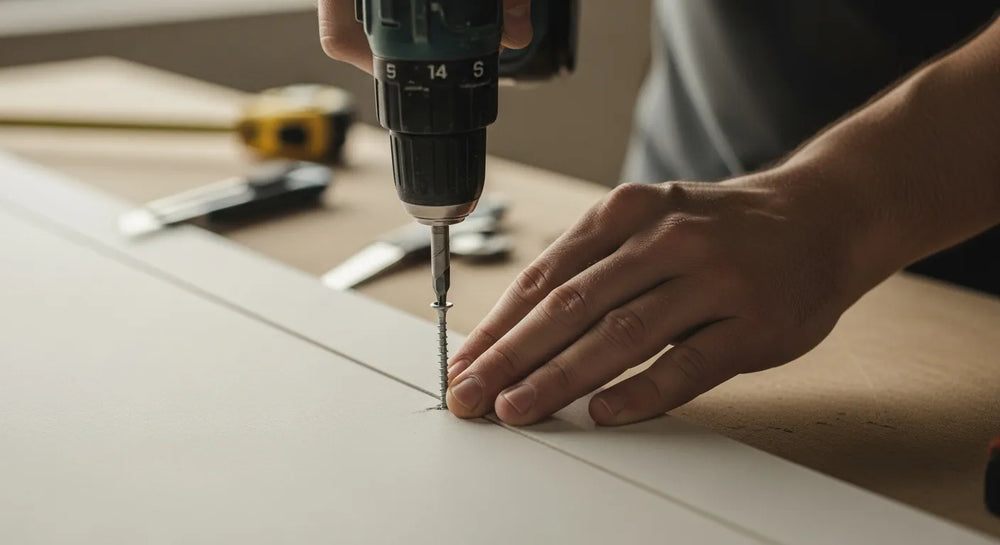
Anchoring Walls to Concrete: A Professional Guide
Table of Contents
- Introduction
- Understanding the Criticality of Anchoring Walls to Concrete
- Types of Concrete Anchors: Choosing the Right Solution
- Tools and Equipment for Effective Anchoring
- The Step-by-Step Process: How to Anchor a Wall to Concrete
- Best Practices for Long-Term Structural Integrity
- Why U.S.-Made Components Matter for Your Projects
- Streamlining Procurement: Maden.co's Advantage
- Conclusion
- FAQ
Introduction
Imagine the devastating consequences of a structural failure: a newly erected partition wall shifts, vital shelving collapses, or critical machinery detaches from its foundation. Such scenarios are not merely inconvenient; they represent significant safety hazards, costly delays, and profound impacts on project timelines and budgets. The integrity of any structure directly attached to a concrete foundation or wall hinges entirely on the quality and precision of its anchoring. It’s a foundational aspect of construction and installation that, when overlooked or executed improperly, can lead to cascading failures and compromise the safety of an entire operation.
For procurement managers, MRO buyers, and design engineers, understanding the intricacies of anchoring a wall to concrete is not just about technical knowledge; it’s about ensuring compliance, mitigating risk, and selecting components that promise long-term reliability. In a landscape where supply chain resilience and product quality are paramount, choosing the right anchor and installation method becomes a strategic decision. This comprehensive guide will delve into the various types of concrete anchors, the essential tools and techniques for their installation, critical best practices, and the undeniable value of sourcing high-quality, American-made components. Our purpose is to equip you with the insights needed to make informed decisions, ensuring the structural stability and safety of your projects, all while emphasizing the strategic advantage of superior U.S.-manufactured industrial supplies.
Understanding the Criticality of Anchoring Walls to Concrete
The act of anchoring a wall to concrete might seem like a straightforward task, but its implications for structural integrity and operational safety are profound. Concrete, a ubiquitous material in commercial and industrial construction, offers unparalleled strength and durability as a foundation. However, its inert nature means that any attachment to it requires specialized fasteners designed to create a secure, load-bearing connection. Failing to properly anchor a wall can lead to a host of problems, from minor cosmetic damage to catastrophic structural collapse, jeopardizing personnel, equipment, and the entire facility.
Structural Integrity and Safety
At its core, anchoring is about transferring loads from the wall into the concrete substrate. These loads can be complex, encompassing static weights (the weight of the wall itself, plus any items it supports), dynamic forces (vibration from machinery, impact), and environmental stresses (wind, seismic activity). An inadequately anchored wall may sag, crack, or even detach, leading to instability. In industrial settings, where walls might support heavy piping, electrical conduits, or serve as partitions for critical processes, any compromise in their anchoring directly translates to operational risk. The safety of workers, the protection of valuable assets, and the continuity of operations are directly linked to the strength and reliability of these connections.
Compliance and Regulations
Beyond immediate safety, robust anchoring practices are mandated by a myriad of building codes and industry standards. These regulations exist to ensure structures can withstand expected loads and environmental conditions without failure. Compliance with standards such as ASTM (American Society for Testing and Materials) and local building codes is not optional; it’s a legal requirement that protects occupants and property. Specifying and using certified, U.S.-made anchors ensures that components meet stringent quality and performance criteria, simplifying the compliance process and providing peace of mind. For example, a design engineer needing specific material certifications for a new prototype understands that sourcing verified components is non-negotiable for regulatory approval.
Common Scenarios Requiring Anchoring
The need to anchor a wall to concrete arises in countless industrial and commercial applications.
- Framing and Stud Walls: Attaching sole plates of wood or metal stud walls to a concrete slab is fundamental in establishing interior partitions, machinery enclosures, or cleanroom environments.
- Shelving and Racking Systems: Heavy-duty industrial shelving, pallet racks, and storage solutions must be securely anchored to prevent tipping, especially in facilities with forklift traffic or seismic activity.
- Machinery and Equipment Bases: Securing heavy machinery, conveyor systems, or manufacturing cells to a concrete floor prevents movement, reduces vibration, and maintains precise alignment crucial for operational efficiency and safety.
- Safety Barriers and Guardrails: Industrial safety barriers, bollards, and guardrails rely on robust concrete anchoring to provide effective protection against impacts and define safe zones.
- Exterior Walls and Facades: In some construction types, exterior wall panels or non-load-bearing facades may be anchored to a concrete frame or foundation, requiring anchors resistant to environmental exposure.
In each of these scenarios, the selection of the correct anchor type, material, and installation technique is paramount. It dictates not only the immediate success of the installation but also the long-term performance, durability, and safety of the entire system.
Types of Concrete Anchors: Choosing the Right Solution
The diverse world of concrete anchors offers a specialized solution for nearly every application, load requirement, and environmental condition. Making the correct choice is crucial for project success, ensuring optimal performance and safety.
Mechanical Anchors
Mechanical anchors achieve their holding power through physical expansion, wedging, or friction against the concrete. They are versatile and widely used across various applications.
Wedge Anchors
Wedge anchors are heavy-duty, through-fastening anchors renowned for their high pull-out strength. They consist of a threaded stud, a nut, and an expansion clip. Once inserted into a pre-drilled hole, tightening the nut pulls the stud upwards, expanding the clip against the concrete, creating a secure grip. They are excellent for heavy-duty applications like securing structural elements, heavy machinery, or robust shelving. They are typically installed after the fixture is in place, allowing the anchor to pass through it, hence "through-fastening."
Sleeve Anchors
Sleeve anchors are similar to wedge anchors but are generally designed for lighter to medium-duty applications. They consist of a threaded bolt, a nut, and a metal sleeve that expands as the nut is tightened. The sleeve provides a wider area of contact, making them suitable for fastening objects like handrails, electrical boxes, or lighter partition walls to concrete, block, or brick. They are known for their ease of installation and versatility across various masonry materials.
Drop-In Anchors
Drop-in anchors provide a flush-mounted, internally threaded socket within the concrete, ideal for situations where a removable bolt or threaded rod is required. The anchor is hammered into a pre-drilled hole, causing an internal wedge to expand the anchor against the concrete. This creates a strong, tamper-resistant female thread. They are particularly useful for overhead applications, suspended ceilings, or when machinery needs to be bolted down and potentially moved in the future. For a reliable, U.S.-made option, consider the BN Products 3/8 Inch Inside Thread Sanko Drop-In Concrete Anchor available through Maden.co, offering excellent thread engagement and holding power for robust installations.
Tapcon Screws
Tapcon screws are self-tapping concrete screws that cut their own threads into a pre-drilled pilot hole. They are quick to install and offer good holding power for light to medium loads. They are commonly used for attaching electrical conduits, junction boxes, or smaller wall plates to concrete, brick, or block. Their ease of use makes them a favorite for many general fastening tasks where speed is a factor and extreme loads are not anticipated.
Strike Anchors
Strike anchors are hammer-driven expansion anchors designed for quick installation. They consist of a steel pin and an expansion sleeve. Once inserted into a pre-drilled hole, the pin is struck with a hammer, driving it into the sleeve and expanding the anchor within the concrete. They are suitable for light to medium-duty applications and are often used for attaching furring strips, electrical clips, or non-load-bearing partitions.
Adhesive/Chemical Anchors
Chemical anchors, also known as adhesive anchors, utilize a high-strength resin to create a bond between the anchor rod and the concrete. These anchors are non-expansive, meaning they do not exert outward pressure on the concrete, making them ideal for close-to-edge installations or in situations where concrete strength might be compromised.
They offer superior load-bearing capacity, particularly in tension, and are excellent for dynamic loads or in areas prone to vibration. The process involves drilling a hole, thoroughly cleaning it, injecting the resin, and then inserting a threaded rod or rebar. The resin cures, encapsulating the rod and forming a robust, permanent bond. Chemical anchors are often specified for critical applications, structural steel connections, and where seismic resistance is a concern.
Specialty Anchors
Beyond the common types, specialized anchors cater to unique structural requirements.
Undercut Anchors
Undercut anchors are designed for exceptionally high pull-out strength in concrete. A special drill bit creates an undercut profile at the bottom of the hole, and the anchor is then inserted and expanded into this profile, mechanically locking it into place. This method provides superior performance, especially in cracked concrete or when very high tensile loads are expected. They are often used for curtain walls, precast concrete panels, or heavy structural connections.
Concrete Anchor Shear Connectors
For composite construction, where steel and concrete work together to bear loads, concrete anchor shear connectors are essential. These specialized fasteners, typically stud-welded to steel beams, embed into the concrete slab, creating a shear connection that allows the two materials to act as a single, stronger unit. They are critical in bridge construction, high-rise buildings, and industrial flooring systems where composite action significantly enhances load-bearing capacity and stiffness. For example, for applications demanding precise and robust shear connections, the 1-Headed Concrete Anchor Shear Connector Chuck and the complementary Concrete Anchor Shear Connector Chuck Set provide the specialized tooling required for efficient and reliable stud welding of these critical components. Sourcing these specialized tools and components ensures projects meet exacting engineering specifications and performance standards.
Tools and Equipment for Effective Anchoring
Proper installation of concrete anchors requires a specific set of tools and equipment to ensure accuracy, safety, and the long-term integrity of the connection. Using the right tools not only makes the job easier but also guarantees that the anchors achieve their designed load capacities.
Hammer Drill and Bits
The hammer drill is indispensable for drilling holes into concrete. Unlike a standard rotary drill, a hammer drill combines rotation with a rapid hammering action, pulverizing the concrete and efficiently removing material.
- Selecting the Right Drill Bit: For mechanical anchors, carbide-tipped masonry bits are essential. The bit's diameter must match the anchor's diameter precisely to ensure proper expansion and grip. For chemical anchors, the hole diameter might be slightly larger, as specified by the manufacturer, to accommodate the resin. It is crucial to use bits designed for concrete and to regularly check for wear, as dull bits can create oversized or irregular holes that compromise anchor performance.
Impact Wrench or Torque Wrench
For most mechanical anchors, a specific torque value must be applied to the nut to achieve proper expansion and engagement with the concrete.
- Torque Wrench: A torque wrench is critical for applying the precise amount of force specified by the anchor manufacturer. Under-torqueing can result in insufficient expansion and pull-out strength, while over-torqueing can damage the anchor, crack the concrete, or strip threads.
- Impact Wrench: While impact wrenches are effective for quickly tightening fasteners, they may not provide the precise control needed for critical anchor installations. If used, the final torque should always be verified with a torque wrench.
Measuring Tools
Accuracy is paramount in anchoring.
- Tape Measure: For precise anchor spacing and layout.
- Level: To ensure the wall or fixture being anchored is plumb and level, which is crucial for structural stability and aesthetic appeal.
- Chalk Line: For marking straight lines on large concrete surfaces, facilitating accurate placement of multiple anchors.
Cleaning Tools
The cleanliness of the drilled hole directly impacts anchor performance, especially for chemical anchors.
- Wire Brush: To scrub the inside of the hole, removing loose concrete dust and debris.
- Air Blower/Vacuum: To thoroughly clear dust and particles from the hole. For chemical anchors, a completely dust-free hole is critical for the resin to achieve its full bonding strength.
Safety Gear
Safety should always be the top priority.
- Safety Glasses: To protect eyes from flying debris and dust.
- Gloves: To protect hands from abrasions and chemicals.
- Hearing Protection: Hammer drills can be very loud, necessitating ear protection.
- Dust Mask/Respirator: Concrete dust contains crystalline silica, which can be harmful if inhaled. A proper dust mask or respirator is essential.
The Step-by-Step Process: How to Anchor a Wall to Concrete
Anchoring a wall to concrete is a precise process that, when followed meticulously, guarantees a secure and lasting connection. This general guide covers the critical steps common to most mechanical and chemical anchoring methods.
1. Planning and Layout
Before drilling, meticulous planning is essential.
- Determine Anchor Type and Size: Based on the wall material, expected loads (tension, shear, dynamic), concrete type, and environmental conditions, select the appropriate anchor. Refer to manufacturer's specifications for load capacities.
- Mark Anchor Locations: Use a tape measure, level, and chalk line to accurately mark the anchor points on the wall's base plate and corresponding concrete surface. Ensure adequate edge distance and spacing between anchors to prevent concrete spalling or premature failure. These distances are crucial and found in the anchor manufacturer's technical data.
- Check for Obstructions: Before drilling, use a stud finder or ground penetrating radar (GPR) if necessary, to verify there are no hidden rebar, electrical conduits, or plumbing lines within the drilling path.
2. Drilling Holes
This is a critical step where precision matters most.
- Select the Correct Drill Bit: As discussed, use a carbide-tipped masonry bit of the exact diameter specified by the anchor manufacturer.
- Set Drill Depth: Many hammer drills have a depth stop. Set it to the anchor's embedment depth, plus a little extra (typically 1/2 inch) to allow for dust accumulation at the bottom of the hole, especially for expansion anchors. For chemical anchors, the depth must be precise to ensure full encapsulation of the threaded rod.
- Drill Perpendicular: Hold the hammer drill firmly and drill straight into the concrete, maintaining a 90-degree angle to the surface. Avoid wobbling the drill, which can create an oversized or egg-shaped hole.
- Drill Multiple Holes: For a wall, you will typically drill multiple holes along the bottom plate, ensuring consistent depth and alignment.
3. Cleaning the Holes
A properly cleaned hole is vital for anchor performance, particularly for adhesive anchors.
- Brush and Blow: Use a stiff wire brush to thoroughly scrub the inside of the drilled hole. Follow this by using an air blower (or a shop vacuum in reverse) to expel all concrete dust and debris. Repeat this process until the hole is visibly clean. For chemical anchors, this step cannot be overemphasized, as residual dust will severely compromise the bond.
4. Anchor Installation
The method of installation varies significantly based on the anchor type.
For Mechanical Anchors (e.g., Wedge Anchors, Drop-ins):
- Wedge/Sleeve Anchors: Insert the anchor through the pre-drilled hole in the wall base plate and into the concrete. For wedge anchors, ensure the expansion clip is fully embedded. For sleeve anchors, the sleeve must be fully seated.
- Drop-In Anchors: Insert the anchor into the pre-drilled concrete hole until it is flush with the surface. Use a setting tool and a hammer to drive the internal wedge, expanding the anchor. Once set, a threaded bolt can be inserted and tightened.
For Adhesive/Chemical Anchors:
- Dispense Resin: Following manufacturer instructions, dispense the chemical resin into the cleaned hole. Ensure the correct amount is used—typically filling the hole from the bottom up, about two-thirds full, to allow for displacement by the rod.
- Insert Threaded Rod: Slowly twist the threaded rod into the resin-filled hole until it reaches the bottom. This twisting action ensures full contact between the resin, the rod, and the concrete.
- Cure Time: Allow the resin to cure completely according to the manufacturer's specifications. Do not apply any load during the curing period.
5. Securing the Wall
Once the anchors are installed and, for chemical anchors, fully cured, the wall can be securely fastened.
- Position the Wall: Carefully place the wall's bottom plate over the installed anchors or threaded rods, aligning the pre-drdrilled holes.
- Install Washers and Nuts: Place appropriate washers (flat and/or lock washers) over the anchor studs or threaded rods, followed by the nuts.
- Tighten Fasteners: For mechanical anchors, use a torque wrench to tighten the nuts to the manufacturer's specified torque value. This ensures the anchor expands correctly and achieves its rated load capacity. For chemical anchors, tighten the nuts once the resin is fully cured, also to specified torque.
6. Torqueing and Verification
The final step for mechanical anchors involves precise torqueing. For chemical anchors, it’s about verifying the cure.
- Torque Verification: Double-check all nuts with a calibrated torque wrench to ensure they meet specifications. This is crucial for load distribution and overall structural integrity.
- Visual Inspection: Conduct a thorough visual inspection of all anchored points to confirm proper installation, checking for any signs of concrete cracking or anchor deformities.
By following these steps meticulously, industrial buyers and engineers can ensure that walls are anchored securely, meeting both safety standards and project requirements.
Best Practices for Long-Term Structural Integrity
Achieving a secure initial anchor is only part of the equation. Ensuring long-term structural integrity requires adherence to best practices that consider the lifespan of the connection and the environment it operates within.
Material Selection
The choice of anchor material is as critical as the anchor type itself.
- Corrosion Resistance: In environments exposed to moisture, chemicals, or saltwater, selecting anchors made from stainless steel (e.g., 304 or 316) or galvanized steel is imperative to prevent rust and material degradation. Corrosion can significantly weaken an anchor, leading to premature failure.
- Load Bearing Capacity: Always match the anchor's material and design to the anticipated loads. High-strength steel alloys are often required for heavy-duty structural applications. Ensure the chosen material meets or exceeds the necessary specifications, especially for critical infrastructure.
- Compliance with Standards: Rely on components that adhere to recognized industrial standards (e.g., ASTM, DIN, NPT). At Maden.co, we emphasize American Manufacturing Pride, offering products from verified U.S. manufacturers who consistently meet these rigorous benchmarks.
Environmental Factors
The operating environment heavily influences anchor performance over time.
- Moisture and Chemicals: Assess the risk of moisture ingress and exposure to corrosive chemicals. These factors can accelerate anchor degradation and compromise concrete integrity. Proper sealing around anchor points or using chemically resistant anchors and resins can mitigate these risks.
- Temperature Extremes: Extreme temperature fluctuations can cause materials to expand and contract, potentially loosening anchors over time. Consider anchors designed to perform well in the expected temperature range.
- Vibration and Seismic Activity: In areas prone to vibration (e.g., near heavy machinery) or seismic events, choose anchors specifically rated for dynamic or seismic loads, such as chemical anchors or specialized undercut anchors.
Load Considerations
Understanding the types of loads an anchor will experience is fundamental to its selection and installation.
- Static vs. Dynamic Loads: Static loads are constant (e.g., the weight of a wall), while dynamic loads vary over time (e.g., vibrations, impacts). Dynamic loads require anchors with higher fatigue resistance.
- Shear vs. Tension Loads: Shear loads act parallel to the concrete surface (e.g., a wall pushing sideways), while tension loads pull perpendicularly away from the surface (e.g., an overhead fixture pulling down). Many anchors perform better in one type of load than the other. Often, combinations of these loads must be accounted for.
- Combined Loads: Real-world applications rarely involve pure tension or pure shear. Most anchors experience combined loads, and engineering calculations must consider these complex force vectors to ensure safety factors are met.
Inspection and Maintenance
Even the best installations require ongoing vigilance.
- Regular Inspections: Periodically inspect anchored connections for signs of loosening, corrosion, or concrete damage. This is particularly important in high-traffic or high-stress areas.
- Retightening: While generally not recommended for most concrete anchors, some mechanical anchors may require periodic retorqueing if settling occurs or if a manufacturer specifies it. Always follow manufacturer guidelines.
- Documentation: Maintain detailed records of anchor types, installation dates, load ratings, and inspection results. This documentation is invaluable for maintenance planning and regulatory compliance.
By integrating these best practices into your procurement and project management workflows, you significantly enhance the reliability, safety, and longevity of any wall anchored to concrete, aligning with our values of Industrial Excellence and long-term customer success.
Why U.S.-Made Components Matter for Your Projects
In an increasingly interconnected global economy, the choice of where to source industrial components has become a critical strategic decision. For essential items like concrete anchors, the benefits of opting for U.S.-manufactured products extend far beyond simple patriotism; they offer tangible advantages in quality, reliability, and supply chain resilience that directly impact project success and profitability.
Quality and Consistency
American manufacturing is synonymous with stringent quality control and adherence to some of the highest industrial standards globally. When you select U.S.-made anchors, you are investing in components engineered and produced under strict regulations, often exceeding international benchmarks.
- Adherence to Standards: U.S. manufacturers consistently meet or surpass specifications set by organizations like ASTM, ISO, and other industry-specific bodies. This ensures that products like concrete anchors possess verified material properties, load capacities, and performance characteristics.
- Precision Engineering: American factories often leverage advanced machinery and skilled labor, resulting in components with superior dimensional accuracy and consistent quality across batches. This reduces the risk of fitment issues, installation problems, and premature failure.
- Transparency and Traceability: With U.S.-made products, there’s often greater transparency regarding the manufacturing process, material origins, and testing protocols. This traceability is invaluable for quality assurance, compliance audits, and troubleshooting.
Supply Chain Resilience and Transparency
The past few years have highlighted the vulnerabilities inherent in complex global supply chains. Sourcing domestically offers a powerful antidote to these challenges.
- Reduced Lead Times: Shorter shipping distances and fewer international logistical hurdles mean quicker delivery times, reducing project delays and improving inventory management. For an MRO buyer facing an unexpected equipment breakdown, the ability to quickly find and finance a verified, U.S.-made part is a game-changer.
- Enhanced Reliability: Domestic supply chains are generally less susceptible to geopolitical disruptions, international shipping delays, and fluctuating import tariffs. This translates to more predictable access to critical components.
- Simplified Communication: Direct communication with U.S. manufacturers or distributors simplifies technical support, custom orders, and problem resolution, avoiding language barriers and time zone differences. This aligns with our core value of Supply Chain Transparency.
Economic Impact and Supporting American Jobs
Beyond the immediate project benefits, choosing U.S.-made industrial components contributes to a broader economic good.
- Job Creation: Every purchase supports American manufacturing jobs, from engineers and machinists to logistics and administrative staff, strengthening local economies.
- Innovation: A robust domestic manufacturing base fosters innovation, driving research and development in materials science, production techniques, and product design.
- Economic Security: A strong manufacturing sector is a cornerstone of national economic security, ensuring critical industries have access to the components they need without undue reliance on foreign sources.
Maden.co’s Role: Democratizing Access to Verified U.S. Manufacturers
At Maden.co, our mission is to democratize access to American manufacturing. We achieve this by connecting industrial buyers with an extensive network of over 800+ verified U.S. manufacturers, offering a comprehensive catalog of over 2.5 million American-made products. We believe that America’s manufacturing revival is here, and we are committed to making American-made components as accessible and convenient as any global alternative. Our platform embodies core values like Digital Innovation and Customer Empowerment, ensuring that procurement managers, design engineers, and business owners can confidently source the highest quality industrial supplies.
When you source through Maden.co, you're not just buying a part; you're investing in quality, reliability, and the future of American industry. This strategic partnership helps improve your Total Cost of Ownership (TCO) by reducing risks associated with inferior components and unreliable supply chains, reinforcing the value proposition of U.S.-made excellence.
Streamlining Procurement: Maden.co's Advantage
In the complex world of industrial procurement, efficiency, reliability, and access to quality components are paramount. Maden.co stands as America's premier B2B marketplace, meticulously designed to meet these exact needs for procurement managers, MRO buyers, and design engineers across the nation. We are more than just a marketplace; we are a strategic partner in building a more reliable and efficient procurement process, driving American manufacturing forward.
A Vast Catalog of U.S.-Made Excellence
Imagine having immediate access to over 2.5 million American-made products from a network of 800+ verified U.S. manufacturers. That's the power of Maden.co. Our platform is engineered to connect you directly with the components you need, from standard fasteners and specialized anchors to custom-fabricated parts, all proudly made in the USA. This unparalleled access means:
- Reduced Procurement Friction: No more sifting through unreliable international suppliers or dealing with uncertain lead times. Our intuitive interface and powerful search capabilities allow you to quickly locate specific products with certified specifications.
- Access to Hard-to-Find Components: For a design engineer needing specific material certifications for a new prototype, or a procurement manager under pressure to source a specific DIN 931 compliant hex cap screw, our vast catalog dramatically increases the likelihood of finding that elusive, high-quality U.S.-made part.
- Improved Total Cost of Ownership (TCO): By reducing risks associated with supply chain disruptions, ensuring product quality that minimizes rework and failures, and streamlining the purchasing process, Maden.co helps significantly lower your overall procurement costs.
Instant Financing: Empowering Your Projects
A key differentiator that sets Maden.co apart is our "Instant Financing" option. We understand that large-volume purchases or capital-intensive projects require flexible financial solutions. This feature is not merely a payment method; it's a strategic tool designed to empower your business to manage cash flow effectively and execute projects without unnecessary delays.
- Streamline Capital-Intensive Projects: Whether you're undertaking a major facility expansion, upgrading critical machinery, or stocking up on essential MRO supplies, Instant Financing provides the capital flexibility you need. It allows you to make larger, more strategic purchases when the opportunity arises, rather than being constrained by immediate budget limitations.
- Maintain Cash Flow: By deferring payment or spreading it over time, businesses can preserve working capital for other operational needs, enhancing financial agility. This is particularly valuable for projects with long billing cycles or those requiring significant upfront investment in materials.
You can apply for Instant Financing at checkout to streamline your capital-intensive projects. This seamless integration means you can secure the vital U.S.-made components you need, precisely when you need them, without compromising your financial liquidity.
Join the American Manufacturing Revival
Our vision at Maden.co is to be the definitive platform that proves American-made components are as accessible and convenient as any global alternative. We are actively driving the manufacturing revival, and we invite U.S. manufacturers to be a part of this movement.
- Expand Your Reach: If you are a U.S. manufacturer producing high-quality industrial components, Maden.co offers an unparalleled opportunity to connect with a nationwide network of serious buyers actively seeking American-made products.
- Grow Your Business: Our platform provides the digital tools and marketplace visibility to expand your customer base and grow your business.
Are you a U.S. manufacturer? Register as a vendor and join the American manufacturing revival. Together, we can strengthen domestic supply chains and elevate the standard of industrial excellence.
Conclusion
The secure anchoring of walls to concrete is a fundamental aspect of construction and industrial maintenance, directly impacting safety, structural integrity, and operational longevity. From selecting the precise type of anchor—whether a robust wedge anchor, a versatile drop-in solution like the BN Products 3/8 Inch Inside Thread Sanko Drop-In Concrete Anchor, or specialized components such as the 1-Headed Concrete Anchor Shear Connector Chuck and its accompanying Concrete Anchor Shear Connector Chuck Set—to adhering to meticulous installation procedures and environmental considerations, every step is critical. The long-term performance and safety of these connections hinge on quality components and expert execution.
At Maden.co, we understand that quality and reliability start with the source. Our commitment to democratizing access to American manufacturing means providing you with a transparent, efficient, and reliable marketplace for all your industrial procurement needs. By choosing U.S.-made components, you’re not only ensuring superior quality, supply chain resilience, and compliance with stringent standards, but you’re also investing in the strength of American industry.
We encourage you to explore the vast catalog of U.S.-manufactured industrial supplies on Maden.co. Discover how our platform can streamline your procurement, enhance your project reliability, and support the American manufacturing revival. For any specific sourcing questions or project challenges, our team is ready to help; you can easily contact us for expert guidance. And remember, for those capital-intensive projects, you can leverage our convenient Instant Financing option at checkout to manage your cash flow effectively. Elevate your projects with the confidence that comes from Maden.co's U.S.-made excellence.
FAQ
Q1: What's the best type of anchor for extremely heavy loads in concrete?
For extremely heavy loads, especially those involving tension or dynamic forces, adhesive/chemical anchors often provide the highest pull-out strength and reliability. They create a molecular bond with the concrete, distributing the load over a larger area without exerting expansive stress. Undercut anchors are another excellent mechanical option for high tensile loads, as they physically lock into a specially prepared profile in the concrete. Always consult the manufacturer's load data for specific applications.
Q2: How do I choose between mechanical and chemical anchors for a wall?
The choice between mechanical and chemical anchors depends on several factors. Mechanical anchors are generally quicker to install and cost-effective for moderate to heavy loads where precise hole cleaning is less critical. They rely on friction or expansion. Chemical anchors, while requiring more careful installation (thorough hole cleaning, cure time), offer superior strength, especially in tension and dynamic load situations, and are ideal for close-to-edge applications or in compromised concrete where expansion stress is a concern. For critical structural applications or those in harsh environments, chemical anchors are often preferred.
Q3: What are some common mistakes to avoid when anchoring to concrete?
Common mistakes include using the wrong drill bit size, not cleaning the drilled hole thoroughly (especially for chemical anchors), failing to set the anchor to the correct embedment depth, over- or under-torqueing mechanical anchors, and not considering edge distance and spacing. Additionally, neglecting environmental factors like moisture or chemical exposure, or failing to account for the specific load types (shear vs. tension) can lead to premature anchor failure. Always follow manufacturer specifications and best practices.
Q4: How does Maden.co ensure the quality of its U.S.-made anchors?
At Maden.co, our commitment to quality is foundational. We partner exclusively with over 800+ verified U.S. manufacturers, each rigorously vetted to ensure they adhere to high industrial standards, including ASTM, ISO, and other relevant certifications. Our platform emphasizes supply chain transparency, allowing buyers to trust that the American-made anchors and other components they procure meet stringent quality controls and performance specifications. This focus on domestic, verified suppliers ensures consistent product quality and reliability for all our customers.


