
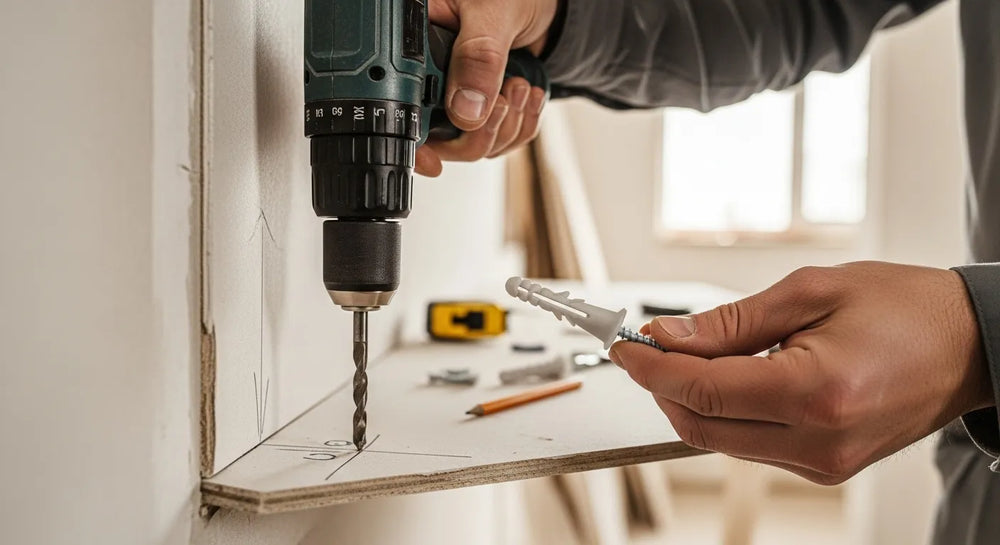
Anchors for Concrete: Essential Decisions for Structural Integrity
Table of Contents
- Introduction
- Understanding Concrete Anchors: More Than Just a Fastener
- Types of Concrete Anchors and Their Applications
- Critical Factors Influencing Anchor Selection
- Consequences of Improper Anchoring: Why Getting It Right Matters
- The Maden.co Advantage: Sourcing American-Made Concrete Anchors
- Leveraging Instant Financing for Large-Scale Projects
- Practical Scenarios: When and How to Choose
- Installation Best Practices: Ensuring Performance
- Partnering for Success: Maden.co's Commitment to American Manufacturing
- Conclusion
- Frequently Asked Questions (FAQ)
Imagine a critical infrastructure project halted because a seemingly minor component failed, compromising safety and delaying completion. Or a manufacturing plant experiencing costly downtime due to a critical piece of machinery coming loose from its foundation. In the demanding world of industrial construction and maintenance, the integrity of a structure often hinges on its most fundamental connections. While concrete is renowned for its strength, fastening anything to it requires a specialized approach that goes far beyond a simple nail or screw. This raises a crucial question for procurement managers, MRO buyers, and design engineers alike: do you need anchors for concrete, and if so, how do you ensure you select the right ones?
This post will delve into the complexities of concrete anchoring, exploring why these specialized fasteners are indispensable, the various types available, and the critical factors that govern their selection and performance. We will examine the potential pitfalls of improper anchoring and highlight the strategic advantages of sourcing high-quality, American-made components. By the end, you will have a comprehensive understanding of how to make informed decisions that safeguard projects, enhance operational efficiency, and contribute to the long-term resilience of your infrastructure, all while navigating the procurement landscape with confidence.
Introduction
In the robust world of industrial and commercial construction, concrete stands as a pillar of strength and durability. From towering skyscrapers and expansive bridges to the foundations of manufacturing facilities and critical infrastructure, concrete provides the bedrock upon which our modern world is built. However, the sheer density and unyielding nature of this material present a unique challenge when it comes to attaching other elements. Unlike wood or softer materials that can be easily penetrated, concrete demands specialized fastening solutions to ensure lasting stability and safety. This is where the crucial role of concrete anchors comes into play. The question of "do you need anchors for concrete" isn't merely about attaching one thing to another; it's about engineering a connection that can withstand immense forces, endure harsh environments, and guarantee the structural integrity of an entire system. Without the correct anchoring solution, even the most meticulously planned projects can falter, leading to catastrophic failures, costly delays, and significant safety hazards.
This blog post aims to provide a definitive guide for procurement managers, MRO buyers, and design engineers grappling with these critical decisions. We will dissect the fundamental principles behind concrete anchoring, exploring the diverse array of anchor types, their specific applications, and the rigorous selection criteria that must be applied. We will emphasize the importance of compliance with industry standards, the benefits of advanced anchoring techniques, and the significant role that sourcing high-quality, verified U.S.-made products plays in overall project success. Our objective is to equip you with the knowledge necessary to confidently specify, procure, and utilize the ideal concrete anchors, ensuring that your projects stand on the strongest possible foundations.
Understanding Concrete Anchors: More Than Just a Fastener
At its core, a concrete anchor is a device used to secure an object to a concrete base material. This might seem straightforward, but the engineering behind these fasteners is anything but simple. Unlike ordinary screws or bolts, concrete anchors are designed to create a strong, reliable connection within a material known for its compressive strength, but which can be prone to cracking under certain loads. Their purpose extends beyond mere attachment; they are often integral to the structural integrity and safety of the installation.
What are Concrete Anchors?
Concrete anchors encompass a broad category of fasteners, each engineered to perform under specific conditions and loads. They work by creating a mechanical interlock, friction, or chemical bond with the concrete. This connection allows them to transfer tensile (pull-out) and shear (sideways) loads from the attached object into the concrete structure. The effectiveness of an anchor is dictated by its design, the quality of its materials, the condition of the concrete, and the precision of its installation. For industrial buyers, understanding these nuances is paramount to avoiding costly failures and ensuring long-term reliability.
Why Concrete Requires Special Anchoring
The unique properties of concrete necessitate specialized anchoring methods. Concrete is a heterogeneous material, strong in compression but relatively weak in tension. It can also crack, especially when subjected to dynamic loads or seismic activity. Standard fasteners are simply not designed to create a secure, load-bearing connection in this environment.
- Load Distribution: Concrete anchors are engineered to distribute loads effectively within the concrete, preventing localized stress concentrations that could lead to spalling or failure.
- Expansion Mechanisms: Many mechanical anchors utilize an expansion mechanism that wedges them tightly against the sides of a drilled hole, creating significant frictional resistance.
- Chemical Bonding: Adhesive anchors form a tenacious chemical bond with the concrete, essentially becoming one with the base material, offering exceptional load capacities.
- Crack Management: Advanced anchors are designed to perform reliably even in cracked concrete, a critical consideration for safety-critical applications.
The Core Question: When do you need anchors for concrete?
The answer to do you need anchors for concrete is almost always yes, whenever you intend to permanently or semi-permanently attach anything to a concrete surface that will bear a load or requires secure fixation. This includes a vast array of applications across various industries:
- Construction: Securing structural steel, attaching facades, installing heavy machinery, mounting handrails, safety barriers, and electrical conduits.
- Manufacturing: Fastening production lines, robotic equipment, shelving systems, and overhead utilities to concrete floors and walls.
- Utilities: Anchoring light poles, utility boxes, pipe supports, and communication equipment.
- Infrastructure: Installing highway barriers, bridge components, and tunnel ventilation systems.
- MRO (Maintenance, Repair, and Operations): Replacing worn or damaged anchors, securing new equipment during facility upgrades, or emergency repairs.
For a procurement manager under pressure to source a specific DIN 931 compliant hex cap screw, a design engineer needing specific material certifications for a new prototype, or an MRO buyer facing an unexpected equipment breakdown, the ability to quickly find and finance a verified, U.S.-made part is a game-changer. This is precisely where the strategic advantage of a platform like Maden.co becomes clear. We focus on connecting industrial buyers with a vast catalog of over 2.5 million American-made products from our network of 800+ verified U.S. manufacturers. Our mission is to democratize access to American manufacturing, ensuring that high-quality, compliant components, including concrete anchors, are readily available. You can learn more about our mission to champion American manufacturing here: About Maden.co.
Types of Concrete Anchors and Their Applications
The sheer variety of concrete anchors available can be daunting. Each type offers specific advantages and limitations, making careful selection crucial. Understanding these differences is key to ensuring performance, safety, and cost-effectiveness.
Mechanical Anchors
Mechanical anchors are among the most common types, relying on friction or a positive interlock to create a connection. They are generally simpler and quicker to install than adhesive anchors, making them suitable for a wide range of applications.
Wedge Anchors
Often considered the workhorse of mechanical anchors, wedge anchors consist of a threaded stud, an expansion clip, and a nut and washer. As the nut is tightened, the clip expands against the sides of the drilled hole, creating a powerful friction grip. They are excellent for heavy-duty applications, overhead installations, and situations where high tensile loads are expected. They are particularly effective in solid, uncracked concrete.
Sleeve Anchors
Similar to wedge anchors but designed for lighter to medium-duty applications, sleeve anchors consist of a threaded bolt surrounded by a expandable sleeve. As the bolt is tightened, it draws the cone-shaped end into the sleeve, causing it to expand. They are versatile and can be used in concrete, block, and brick.
Drop-in Anchors
These anchors are a female-threaded insert designed to be hammered into a pre-drilled hole. An expansion plug is then driven into the anchor body, forcing its sides to expand against the concrete. Drop-in anchors are flush-mounted, making them ideal for applications where the anchor needs to be concealed or where fixtures may be frequently removed and reinstalled. They are excellent for overhead applications and general anchoring of threaded rods. For a reliable, U.S.-made option, consider the BN Products 3/8 Inch Inside Thread Sanko Drop-In Concrete Anchor available through Maden.co. This type of anchor showcases the precision and quality available from American manufacturers.
Strike Anchors and Hammer Drive Anchors
These anchors are designed for quick, light to medium-duty installations. A strike anchor is installed by hammering a pin into the anchor body, causing it to expand. Hammer drive anchors are installed by simply driving the entire anchor into a pre-drilled hole, causing internal components to expand. Both are good for securing smaller fixtures, conduit clips, and electrical boxes.
Lag Shields
Lag shields are non-bottom bearing anchors designed to accept lag screws. They feature an internal tapered bore that causes the shield to expand as the lag screw is driven in. They are often used in softer concrete, brick, or block, and for applications requiring removability.
Adhesive Anchors (Chemical Anchors)
Adhesive anchors utilize a chemical resin, typically epoxy, vinylester, or polyester, to create a bond between a threaded rod or rebar and the concrete. The resin is injected into a clean, pre-drilled hole, and the rod is then inserted. As the resin cures, it forms an incredibly strong, waterproof bond.
- High Load Capacity: Adhesive anchors generally offer superior load-bearing capabilities, especially in tension, compared to many mechanical anchors.
- Cracked Concrete Performance: Many adhesive systems are specifically engineered and tested for use in cracked concrete, providing a critical safety margin in dynamic environments.
- Vibration Resistance: The chemical bond provides excellent resistance to vibration, making them suitable for machinery and dynamic equipment.
- Sealing: The resin seals the hole, providing protection against moisture and corrosive elements.
Adhesive anchors require precise installation, including thorough hole cleaning, proper mixing ratios, and adequate cure times. While the initial installation may be more involved, the resulting performance and reliability are often unmatched for critical applications.
Specialty Anchors
Beyond the standard mechanical and adhesive types, several specialty anchors address unique challenges.
Undercut Anchors
These anchors create a positive mechanical interlock by cutting an inverted cone or bulb-shaped void at the bottom of the drilled hole. The anchor then expands or is inserted into this void. Undercut anchors offer exceptional performance, particularly in cracked concrete and seismic conditions, as they rely on a true mechanical interlock rather than just friction.
Concrete Screw Anchors
These innovative anchors cut their own threads into the concrete as they are driven in, much like a wood screw. They are popular for their ease of installation (no expansion required, meaning closer edge distances are often possible), high shear capacity, and full removability. They are excellent for a wide range of applications from light to heavy-duty.
Shear Connectors
Critical in composite construction, shear connectors, also known as shear studs, are designed to create a strong mechanical bond between concrete slabs and steel beams. They are typically welded to the steel beam and then encased in concrete, allowing the two materials to act as a single, composite unit. This dramatically increases the strength and stiffness of the structure. For detailed specifications on high-quality components designed for such applications, procurement professionals might explore specialized tools like the 1-Headed Concrete Anchor Shear Connector Chuck and the comprehensive Concrete Anchor Shear Connector Chuck Set. These U.S.-made tools facilitate precise and secure installation of shear connectors, ensuring robust composite action in structural projects.
Critical Factors Influencing Anchor Selection
Choosing the right concrete anchor is a multi-faceted decision that requires a thorough evaluation of several key parameters. Overlooking any of these factors can lead to underperformance, premature failure, or even catastrophic collapse.
Load Type and Magnitude (Tensile, Shear, Combined)
This is arguably the most critical factor. What kind of force will the anchor be subjected to, and how much?
- Tensile Loads (Pull-out): Forces pulling directly away from the concrete surface. Overhead installations, suspended loads, and certain machinery tie-downs primarily experience tensile loads.
- Shear Loads (Sideways): Forces acting parallel to the concrete surface, attempting to slide the attached object. Bracing, lateral supports, and horizontal machinery will experience shear.
- Combined Loads: Most real-world applications involve a combination of both tensile and shear forces.
- Dynamic Loads: Loads that change in magnitude or direction over time (e.g., vibrating machinery, wind loads, seismic events). Anchors for dynamic loads require specific testing and ratings.
The anchor's design, embedment depth, and concrete strength all play a role in its ability to resist these loads.
Base Material (Concrete Strength, Condition, Cracking)
The quality and condition of the concrete itself significantly impact anchor performance.
- Concrete Compressive Strength: Stronger concrete allows anchors to achieve higher load capacities. Always verify the concrete's specified compressive strength (f'c) before selection.
- Cracked vs. Uncracked Concrete: This is a fundamental distinction. Anchors tested and approved for cracked concrete are crucial in situations where cracks may develop, whether due to drying shrinkage, thermal stresses, or structural loading. Using anchors only rated for uncracked concrete in a cracked zone can lead to severe underperformance.
- Aggregate Type and Density: While less common, unusual aggregate types or very lightweight concrete can affect drilling and anchor performance.
- Age and Curing: Fully cured concrete provides the most predictable performance.
Environmental Conditions (Moisture, Temperature, Chemical Exposure)
The environment in which the anchor operates dictates material selection and protective coatings.
- Moisture/Water Exposure: Outdoor applications, wet environments, or areas with potential water infiltration require corrosion-resistant materials (e.g., stainless steel, galvanized coatings). Adhesive anchors can also provide a waterproof seal.
- Temperature Extremes: Both very high and very low temperatures can affect the performance of some anchors, particularly adhesive types where curing and long-term strength can be compromised.
- Chemical Exposure: Industrial settings might expose anchors to acids, alkalis, or other corrosive chemicals. Stainless steel grades (304 or 316) or specialty coatings are essential in such cases.
Edge Distance and Spacing
These parameters refer to the distance from an anchor to the edge of the concrete element and the distance between multiple anchors, respectively. Insufficient edge distance or spacing can lead to concrete breakout failure, where a cone of concrete fractures and pulls away. Manufacturers provide minimum requirements based on anchor type and size.
Installation Method and Equipment (Drilling, Setting Tools)
Proper installation is as critical as anchor selection.
- Drilling: Correct drill bit size, depth, and hole cleaning are paramount. Rotary-hammer drills are typically used for concrete.
- Setting Tools: Many anchors require specific setting tools to ensure proper expansion or embedment.
- Torque Control: For mechanical anchors, applying the correct installation torque is vital for achieving specified load capacities. Overtorquing can damage the anchor or the concrete; undertorquing results in insufficient grip.
Regulatory Compliance and Building Codes (IBC, ACI, ICC-ES)
For any construction or industrial project, compliance with relevant building codes and industry standards is non-negotiable.
- International Building Code (IBC): The IBC often references ACI (American Concrete Institute) guidelines for concrete anchoring.
- ACI 318 (Building Code Requirements for Structural Concrete): Provides detailed requirements for concrete design and construction, including anchoring to concrete.
- ICC-ES (International Code Council Evaluation Service) Reports: These reports provide comprehensive evaluations of specific anchor products, detailing their performance characteristics, installation requirements, and compliance with building codes. For procurement managers and design engineers, specifying anchors with valid ICC-ES reports is a best practice, ensuring the product has been rigorously tested and approved for its stated applications.
At Maden.co, we understand that these standards are not merely suggestions but fundamental requirements. Our commitment to Industrial Excellence means we prioritize connecting buyers with U.S.-manufactured products that meet or exceed these critical industry standards, providing the peace of mind that comes with certified quality. Our platform simplifies the search for compliant components, helping you build a more reliable and efficient procurement process.
Consequences of Improper Anchoring: Why Getting It Right Matters
The decision to use anchors for concrete, and more importantly, to use the correct anchors and install them properly, carries significant weight. The consequences of cutting corners or making ill-informed choices can range from minor annoyances to catastrophic failures, impacting safety, costs, and reputation.
Structural Failure and Safety Risks
This is the most severe and immediate risk. An improperly selected or installed anchor can fail to hold its load, leading to:
- Equipment Collapse: Heavy machinery, shelving units, or overhead utilities can fall, causing severe injury or fatality to personnel.
- Structural Instability: Critical structural elements, such as steel beams or facade panels, can detach, compromising the integrity of the entire building or structure.
- Fire Hazards: Detached electrical conduits or equipment can create exposed wiring and fire risks.
- Liability: Companies face immense legal and financial liability in the event of accidents caused by anchor failure.
For MRO buyers, the implications of a faulty anchor during equipment repair or replacement can mean not just downtime, but a direct threat to worker safety.
Project Delays and Cost Overruns
Anchor failures don't just happen in a vacuum; they trigger a cascade of negative effects:
- Remediation Costs: Repairing damaged concrete, removing failed anchors, and reinstalling new ones is expensive and time-consuming.
- Downtime: For manufacturing facilities or operational infrastructure, any delay translates directly into lost production and revenue.
- Penalties: Project delays often come with contractual penalties, further eroding profitability.
- Rescheduling: The domino effect of a delay can disrupt an entire project schedule, impacting other trades and subcontractors.
Procurement managers understand that while the initial cost of a high-quality, properly specified anchor might be slightly higher than a generic alternative, the Total Cost of Ownership (TCO) is dramatically reduced when you factor in avoided failures, delays, and liabilities.
Reputational Damage and Liability
Beyond the immediate financial and safety concerns, improper anchoring can severely damage a company's reputation. A publicized failure can lead to:
- Loss of Trust: Clients, partners, and the public lose confidence in the company's competence and commitment to safety.
- Reduced Future Opportunities: Reputational damage can translate into a loss of future contracts and business.
- Legal Battles: Lawsuits stemming from anchor failures can be protracted, costly, and devastating to a company's standing.
The Strategic Value of U.S.-Made Quality
This is where the choice of sourcing truly matters. When considering do you need anchors for concrete, the quality of the component is paramount. Sourcing anchors from verified U.S. manufacturers offers several strategic advantages:
- Guaranteed Quality and Consistency: American manufacturers often adhere to stringent quality control standards, resulting in consistent product performance and reliability.
- Compliance with Domestic Standards: U.S.-made products are typically designed and tested to meet American building codes and industrial standards (e.g., ACI, ICC-ES), simplifying compliance.
- Supply Chain Transparency: Knowing the origin of your materials fosters trust and allows for better tracking and accountability.
- Reduced Lead Times: Sourcing domestically can significantly reduce shipping times and mitigate risks associated with international logistics.
- Support for the Domestic Economy: Investing in American manufacturing strengthens local economies and ensures a robust industrial base.
At Maden.co, we embody these values. Our entire business model is built on this principle; you can learn more about our mission to champion American manufacturing here: About Maden.co. We believe that the resilience of our nation's infrastructure and industries directly correlates with the quality and accessibility of its components.
The Maden.co Advantage: Sourcing American-Made Concrete Anchors
For procurement professionals, the task of sourcing reliable, compliant, and cost-effective concrete anchors can be complex. The market is saturated with options, and distinguishing high-quality, verifiable products from subpar alternatives requires significant due diligence. This is precisely where Maden.co revolutionizes the industrial procurement process, offering a distinctive advantage built on our core values.
Democratizing Access to American Manufacturing
At Maden.co, our mission is to democratize access to American manufacturing. We believe that securing the best U.S.-made industrial components shouldn't be a challenge. We achieve this by connecting industrial buyers with an expansive network of over 2.5 million American-made products sourced from our carefully curated network of 800+ verified U.S. manufacturers. Our vision is clear: to become the definitive platform that proves American-made components are as accessible and convenient as any global alternative, driving the manufacturing revival with our tagline: "America's manufacturing revival is here." When you consider do you need anchors for concrete, we make it easy to find exactly what you need, manufactured right here at home.
Verified U.S. Manufacturers and Supply Chain Transparency
One of our paramount commitments is to Supply Chain Transparency and Industrial Excellence. Every manufacturer on our platform is thoroughly vetted, ensuring they meet rigorous standards for quality, production capabilities, and ethical practices. This verification process provides procurement managers and design engineers with unparalleled confidence in the origin and quality of their sourced products. You know you're not just buying a product; you're investing in a trusted partnership with an American company dedicated to excellence. This transparency directly enhances your supply chain resilience, reducing risks associated with geopolitical instability, quality control issues, and extended lead times often inherent in global sourcing.
Vast Product Catalog
Our extensive catalog means you're not limited in your search. Whether you require specific DIN-compliant anchors, specialty shear connectors, or a full range of drop-in anchors for concrete, our platform offers a breadth of selection that few others can match. This vast selection covers everything from general-purpose fasteners to highly specialized components, ensuring that your unique project requirements are met with precision and quality. For example, if you need a specific type of drop-in anchor, our selection includes options like the BN Products 3/8 Inch Inside Thread Sanko Drop-In Concrete Anchor, and for demanding structural applications, specialized tools such as the 1-Headed Concrete Anchor Shear Connector Chuck and the Concrete Anchor Shear Connector Chuck Set are readily available.
Improving Total Cost of Ownership (TCO)
While the sticker price of an American-made product might sometimes appear higher upfront, the long-term TCO is often significantly lower. This is due to:
- Reduced Failure Rates: Higher quality products mean fewer replacements and repairs.
- Enhanced Longevity: Superior materials and manufacturing processes lead to longer service life.
- Minimized Downtime: Reliable components reduce the risk of operational stoppages.
- Streamlined Compliance: Products meeting domestic standards reduce regulatory hurdles and risks.
- Predictable Logistics: Shorter, more reliable supply chains reduce shipping costs and delays.
By focusing on verified U.S. manufacturers, Maden.co helps businesses make strategic purchasing decisions that contribute positively to their bottom line over the entire lifecycle of a project or asset. This commitment to Industrial Excellence ensures that every product contributes to your overall operational efficiency.
Streamlined Procurement and Digital Innovation
Our platform is designed with Digital Innovation and Customer Empowerment at its core. We understand the challenges procurement managers face daily: sifting through catalogs, verifying suppliers, and managing complex payment terms. Maden.co simplifies this process with:
- Intuitive Search and Filtering: Quickly locate the exact components you need by specifications, material, or application.
- Detailed Product Information: Access comprehensive data sheets, certifications, and technical specifications for informed decision-making.
- Verified Supplier Profiles: Gain confidence in your suppliers through transparent information and reviews.
- Efficient Order Management: Streamlined processes from selection to delivery.
When you're asking do you need anchors for concrete, our platform gives you the power to answer that question with a confident "yes" and provides the means to procure them efficiently. Explore our vast selection and experience the difference at Maden.co.
Leveraging Instant Financing for Large-Scale Projects
A key differentiator that sets Maden.co apart and further empowers our customers is our "Instant Financing" option. We recognize that industrial procurement, especially for large-volume purchases or critical infrastructure projects, often involves significant capital outlay. Managing cash flow effectively while ensuring access to essential, high-quality components is a constant balancing act for procurement managers and business owners.
Managing Cash Flow Effectively
Instant Financing isn't just a payment method; it's a strategic tool designed to optimize your business operations. It allows you to acquire the necessary inventory, equipment, or components without immediately tying up large amounts of working capital. This flexibility is particularly valuable for:
- Capital-Intensive Projects: Facilitating the purchase of bulk orders of concrete anchors, structural components, or specialized machinery.
- Unexpected Needs: Addressing emergency repairs or sudden surges in demand without straining immediate cash reserves.
- Strategic Stocking: Enabling proactive procurement to build resilient inventory levels, mitigating future supply chain disruptions.
By providing this option, we empower businesses to maintain healthy cash reserves for other operational needs, invest in growth, or manage seasonal fluctuations more efficiently.
Facilitating Larger Volume Purchases
When you determine that, yes, you do need anchors for concrete—and in significant quantities for a major project—Instant Financing can be the key to unlocking those larger purchases. It removes the immediate financial barrier, allowing you to secure the required volume of U.S.-made products when you need them most. This avoids piecemeal purchasing, which can often lead to higher unit costs, increased administrative overhead, and potential project delays.
A Strategic Tool for Businesses
Think of Instant Financing as an extension of your procurement strategy, allowing for greater agility and resource optimization. It aligns with our core value of Customer Empowerment, providing you with the financial flexibility to make the best sourcing decisions for your business.
You can apply for Instant Financing directly at checkout to streamline your capital-intensive projects. This integrated approach ensures that the path from identifying your need for concrete anchors to securing their purchase is as smooth and efficient as possible, reinforcing our commitment to digital innovation and providing comprehensive solutions for the industrial marketplace.
Practical Scenarios: When and How to Choose
To solidify the understanding of when and why you need anchors for concrete, let's explore a few real-world scenarios that procurement managers, MRO buyers, and design engineers frequently encounter.
Example 1: Anchoring Heavy Machinery (High Shear/Tensile)
Challenge: A manufacturing plant needs to install a new, heavy CNC machine that generates significant vibration and requires precise alignment. The machine must be securely anchored to a concrete slab to prevent movement and maintain operational accuracy.
Decision: Given the high dynamic loads (vibration), combined tensile and shear forces, and the criticality of alignment, standard mechanical anchors might not suffice. Adhesive anchors, particularly those rated for cracked concrete and dynamic loading, would be the preferred choice. They offer superior load transfer, vibration resistance, and can be installed with deep embedment for maximum security. Alternatively, high-performance undercut anchors could also be considered due to their positive mechanical interlock. The base concrete's strength and condition (cracked vs. uncracked) would be paramount in the final selection, along with relevant ICC-ES reports.
Example 2: Securing Handrails or Safety Barriers (Compliance Critical)
Challenge: Installing safety handrails along mezzanines or concrete stairs in a warehouse or industrial facility. These handrails must meet OSHA regulations and building codes for occupant safety, requiring reliable pull-out and lateral resistance.
Decision: Here, the loads might not be as extreme as heavy machinery, but human safety makes compliance paramount. Wedge anchors or concrete screw anchors are often suitable, provided they are correctly sized and installed with adequate edge distance and embedment. The key is to select anchors that have an ICC-ES report confirming their load capacities in both uncracked and potentially cracked concrete. Stainless steel versions would be specified for outdoor or corrosive environments. For design engineers, ensuring the anchor system's capacity meets or exceeds code requirements for impact and static loads is non-negotiable.
Example 3: Fastening Electrical Conduits (Light Duty, Speed)
Challenge: An MRO team needs to quickly and securely attach numerous electrical conduit runs to concrete walls and ceilings during a facility upgrade. Speed of installation and consistency are important, but loads are relatively light.
Decision: For light-duty applications like conduits, pipes, or ceiling hangers, efficiency and ease of installation are key. Drop-in anchors or hammer drive anchors are excellent choices for these scenarios. Drop-in anchors, such as the BN Products 3/8 Inch Inside Thread Sanko Drop-In Concrete Anchor, allow for flush mounting and the use of threaded rod, while hammer drive anchors provide extremely fast installation for direct attachment. Concrete screw anchors are another excellent option due to their speed and removability. The procurement manager would focus on bulk purchasing cost-effectiveness and consistent quality from a reliable U.S. manufacturer.
Example 4: Structural Reinforcement with Shear Connectors
Challenge: A new composite steel-concrete deck system is being designed for a commercial building. The design requires a robust connection between the steel beams and the concrete slab to ensure the two materials act compositely, maximizing strength and stiffness.
Decision: This is a classic application for shear connectors. These specialized studs are welded to the top flange of the steel beams before the concrete is poured. The mechanical interlock created by the shear connector within the cured concrete is essential for transferring horizontal shear forces between the steel and concrete, enabling the composite action. Design engineers must specify the correct size, spacing, and welding procedure for these connectors based on structural analysis and building codes. For the installation process, specialized equipment like a 1-Headed Concrete Anchor Shear Connector Chuck or a Concrete Anchor Shear Connector Chuck Set is indispensable for accurate and efficient welding, ensuring the integrity of the composite structure. Sourcing these high-precision tools from verified U.S. manufacturers through Maden.co ensures reliability and project adherence to tight tolerances.
Installation Best Practices: Ensuring Performance
Even the most perfectly specified concrete anchor will fail if improperly installed. Precision and adherence to manufacturer guidelines are paramount.
Proper Drilling Techniques
- Correct Drill Bit: Always use a carbide-tipped masonry drill bit of the exact diameter specified by the anchor manufacturer.
- Correct Depth: Drill to the specified embedment depth. Over-drilling can reduce embedment, while under-drilling prevents the anchor from seating properly.
- Straight Holes: Ensure holes are drilled perpendicular to the concrete surface to maximize anchor contact and prevent eccentric loading.
Hole Cleaning Importance
This is often overlooked but absolutely critical, especially for adhesive anchors. Concrete dust left in the hole significantly reduces the anchor's capacity.
- Brushing: Use a stiff wire brush of the correct diameter to scour the sides of the hole.
- Blowing: Use compressed air (oil-free) or a hand pump to thoroughly clear all dust and debris. Repeat brushing and blowing multiple times until the hole is perfectly clean.
Torque Specifications
For mechanical anchors, applying the correct installation torque is vital.
- Torque Wrench: Always use a calibrated torque wrench.
- Manufacturer Specs: Adhere strictly to the manufacturer's specified torque values. Overtorquing can stress the concrete, causing premature failure or spalling; undertorquing results in an insufficient connection.
Inspection and Quality Control
- Visual Check: Inspect each installed anchor for proper seating, expansion, and visible damage.
- Load Testing: For critical applications, on-site proof loading or quality assurance testing may be required to verify anchor performance.
- Documentation: Maintain detailed records of anchor type, size, installation date, concrete conditions, and installer certifications.
Adhering to these best practices, coupled with sourcing high-quality, American-made anchors, significantly reduces risk and ensures the long-term integrity of your installations.
Partnering for Success: Maden.co's Commitment to American Manufacturing
The question of do you need anchors for concrete transcends a simple technical query; it’s a foundational consideration for the safety, efficiency, and longevity of any industrial or construction project. Making the right choices in concrete anchoring is not just about compliance; it's about building resilience into every structure and operation.
At Maden.co, we are more than just a marketplace; we are a strategic partner in fostering a more robust and reliable American supply chain. Our unwavering commitment to American Manufacturing Pride drives every aspect of our platform. We empower customers by providing unparalleled access to the highest quality, U.S.-made industrial components, fostering Industrial Excellence in every transaction. By focusing on Supply Chain Transparency and Digital Innovation, we ensure that procurement managers, MRO buyers, and design engineers can find precisely what they need with confidence and efficiency.
The strategic benefits of sourcing through Maden.co are clear: improved Total Cost of Ownership, enhanced supply chain resilience, seamless compliance with critical industry standards, and dramatically reduced procurement friction. We believe that securing U.S.-made products should be a straightforward and beneficial process for every business. We don't just facilitate transactions; we cultivate partnerships that contribute to the collective strength of American industry. We are proud to declare that America's manufacturing revival is here, and we are at its forefront.
Are you a U.S. manufacturer committed to quality and excellence? Join our growing network and become a part of this vital manufacturing revival. You can Register as a vendor and help us expand access to American-made products. If you have specific sourcing questions, or need assistance navigating our vast catalog of verified U.S. manufacturers, our team is ready to help. Please don't hesitate to contact our team for expert support.
Conclusion
The decision of whether do you need anchors for concrete is never trivial. It dictates the safety, durability, and operational efficiency of everything from simple fixtures to critical structural elements and heavy machinery. Understanding the diverse types of anchors, the critical factors influencing their selection, and the absolute necessity of proper installation are paramount for anyone involved in industrial procurement, maintenance, or design.
By choosing high-quality, verified U.S.-made concrete anchors, businesses secure not only superior components but also benefit from enhanced supply chain resilience, adherence to stringent compliance standards, and a significantly reduced Total Cost of Ownership over the lifetime of their projects. This strategic approach mitigates risks, prevents costly delays, and safeguards reputations, all while contributing to the vitality of American manufacturing.
We invite you to experience the transformative power of a streamlined, transparent, and American-focused procurement process. Explore our extensive catalog of over 2.5 million American-made products today and discover the perfect concrete anchoring solutions for your next project. When you're ready to make significant purchases, remember that you can apply for Instant Financing at checkout to streamline your capital-intensive projects, ensuring your business has the flexibility it needs to thrive. Partner with Maden.co and invest in the unwavering strength of American ingenuity and industrial excellence.
Frequently Asked Questions (FAQ)
Q1: What is the most important factor when choosing a concrete anchor?
A1: The most important factor is understanding the load type and magnitude the anchor will experience (tensile, shear, or combined, and whether it's static or dynamic), closely followed by the condition of the concrete base material (strength, cracked or uncracked). These two factors primarily determine the required performance characteristics and ultimately, the anchor type and size needed.
Q2: Can I use the same concrete anchor for both cracked and uncracked concrete?
A2: Not necessarily. Anchors are specifically tested and rated for use in either uncracked concrete, or both cracked and uncracked concrete. It is critical to select anchors that are explicitly approved and tested for cracked concrete if there is any possibility of cracks developing in the service life of the structure, or if the application is in a known cracked zone. Using an anchor only rated for uncracked concrete in a cracked condition can lead to severe underperformance and failure. Always refer to the manufacturer's specifications and ICC-ES reports.
Q3: Why is hole cleaning so important for concrete anchors, especially adhesive types?
A3: Hole cleaning is crucial because concrete dust and debris left in the drilled hole significantly reduce the bonding or friction capabilities of the anchor. For adhesive anchors, dust acts as a barrier, preventing the chemical resin from forming a strong bond with the concrete. For mechanical anchors, dust can interfere with the expansion mechanism, preventing the anchor from achieving its full embedment or specified torque. A properly cleaned hole ensures the anchor can achieve its maximum rated load capacity and provides a reliable, long-lasting connection.
Q4: What are the benefits of sourcing U.S.-made concrete anchors through a platform like Maden.co?
A4: Sourcing U.S.-made concrete anchors through Maden.co offers several key benefits. It ensures access to products manufactured under stringent quality control standards, leading to consistent performance and reliability. It simplifies compliance with domestic building codes and industry standards, reducing project risks. Furthermore, it enhances supply chain transparency and resilience, providing more predictable lead times and reducing reliance on volatile international logistics. This ultimately contributes to a lower Total Cost of Ownership by minimizing failures, downtime, and regulatory hurdles, all while supporting American manufacturing and its economic revival.


